Roofing Contractor
Winfield, IL
- 60190 Storm Exposure: Winfield's northern DuPage position puts it in the primary northeast-tracking storm corridor — 2022 and 2020 hail events affected virtually every block in the 60190 ZIP.
- Older Housing Stock: The majority of Winfield homes were built between 1960 and 1995 — many carrying original or single-replacement roofs now at or past their design life.
- Village Permits: All replacements require a Village of Winfield building permit. We handle filing, inspection scheduling, and final certificate of occupancy sign-off.
Winfield is one of DuPage County's most distinct roofing markets — a compact, single-ZIP village with a high concentration of 1960s–1980s ranch, bi-level, and tri-level homes that carry specific roofing vulnerabilities rarely seen in newer suburban housing. We've completed projects across every neighborhood in the 60190 ZIP and understand the local construction eras, the Village's permitting process, and the hail and ice dam risk patterns that affect Winfield's housing stock better than any contractor working from outside the area.
Northern DuPage County Sits in the Primary Northeast Storm Track — and Winfield's 60190 ZIP Has the Hail History to Prove It
Winfield occupies a position in northern DuPage County where storm systems moving northeast out of the Fox River Valley and the East-Central Illinois plains are still at or near peak intensity before the Chicago urban heat island begins to diminish them. The West Branch DuPage River corridor that runs through Winfield acts as a subtle topographic channel that can concentrate storm cell activity — a pattern that has repeated itself across multiple NOAA-documented events. The July 2022 hail outbreak tracked directly through the 60190 ZIP code, dropping 1.50" to 1.75" stones across the Winfield-Wheaton border area. The August 2020 Derecho produced damaging straight-line winds across all of northern DuPage. The June 2017 severe outbreak left widespread impact damage from Naperville through Wheaton, with the Winfield corridor taking significant hits along the Gary Avenue and Winfield Road corridors.
What makes Winfield's storm history particularly consequential is the age of the housing stock at risk. A large share of Winfield's residential roofs were installed between 1985 and 2005. Roofs in that era — many now approaching or past 20 years of service — were installed to pre-2000 code standards that permitted thinner decking, 3-tab shingles with lower wind uplift ratings, and minimal ice-and-water shield installation. When hail hits a 20-year-old 3-tab roof, the damage documentation and insurance claim scenario is fundamentally different from a 10-year-old architectural shingle roof. Correctly distinguishing storm-caused functional damage from normal weathering under the Illinois Insurance Matching Law requires technical knowledge and NOAA record cross-referencing — which we provide on every inspection as a standard service step.
How we manage DuPage hail & wind claimsWinfield homeowners affected by the 2022 or 2020 events may still have actionable insurance claims depending on carrier and policy type. RCV policies that issued depreciation holdbacks at original claim settlement may have open recoverable depreciation that can still be collected after a completed replacement. Request a free post-storm inspection and policy review.
Ice Dams and Freeze-Thaw Damage Are a Persistent Problem Across Winfield's Ranch-Era Housing Stock
Ice dams form when heat escaping through the attic floor melts snow on the upper roof plane. The meltwater runs toward the cold eave overhang, refreezes, and builds a ridge that blocks subsequent drainage. Water trapped behind the dam backs up under the shingles — and because Illinois code only requires ice-and-water shield 24 inches past the interior warm wall, water traveling further up the eave encounters unprotected felt and decking. The results are ceiling stains, saturated batt insulation, and — in Winfield's pre-1990 ranch homes — structural sheathing rot that is frequently discovered only during a full re-roofing teardown.
Winfield's 1960s and 1970s ranch homes are especially susceptible for several compounding reasons. Low-slope rooflines in the 4:12 to 5:12 range are more vulnerable to ice dam backup than steeper pitches because there is more horizontal distance for water to travel under the shingles before it encounters decking. Original blown cellulose insulation in these homes has typically settled to well below the R-38 minimum now required by Illinois energy code, creating significant attic heat loss. And the shallow soffit overhangs characteristic of postwar ranch construction limit the space available for adequate intake ventilation — meaning many of these homes are functionally underventilated even if the installed vent area nominally meets the older 1:300 standard. Every re-roofing proposal we write for Winfield's ranch-era housing includes a formal attic ventilation and insulation assessment at no charge.
Schedule a winter damage assessmentOriginal 4:12 and 5:12 ranch rooflines with shallow overhangs, minimal soffit venting, and no ridge ventilation. Settled cellulose insulation at or below R-19. Ice dam events are nearly annual in cold winters on these homes. Many have never had ventilation corrected since original construction. Chimney and addition transitions are the primary secondary damage zones.
Bi-level and tri-level construction presents complex attic geometry with split levels and partial cathedral ceilings that create thermal bridges at every floor transition. The low-sloped "bonus" roof sections over the lower-level addition are particularly vulnerable — typically installed with minimal insulation depth and frequently experiencing ice dam backup into the wall cavity rather than the visible ceiling, delaying detection of interior damage until significant rot has occurred.
Generally better ventilated due to post-1993 Illinois code requirements, but dormers and three-season room additions frequently break insulation continuity at the eave. Garage-to-living-space conversions — common in this era — create a recurring ice dam initiation zone at the garage-house transition that affects even otherwise well-ventilated roofs.
Insurance note: Ice dam damage is covered under most Illinois HO-3 policies as a sudden water damage peril. However, a carrier can deny a repeat ice dam claim if the underlying ventilation deficiency was identified in a prior claim and not remediated. We document both the damage and the ventilation condition in every assessment to protect your future claim eligibility.
Winfield's Single ZIP Has Four Distinct Roofing Profiles — Separated by Construction Era, Roof Style, and Proximity to the DuPage River Corridor
Unlike larger DuPage communities with multiple ZIP codes, all of Winfield falls within 60190. But that doesn't mean roofing conditions are uniform. The construction era, proximity to the West Branch DuPage River flood plain, and the neighborhood's position relative to Winfield's commercial corridors all shape the specific roofing vulnerabilities and permit requirements that apply to a given property.
Historic Village Core
Winfield Rd / County Farm Rd — Pre-1970
Oldest Stock
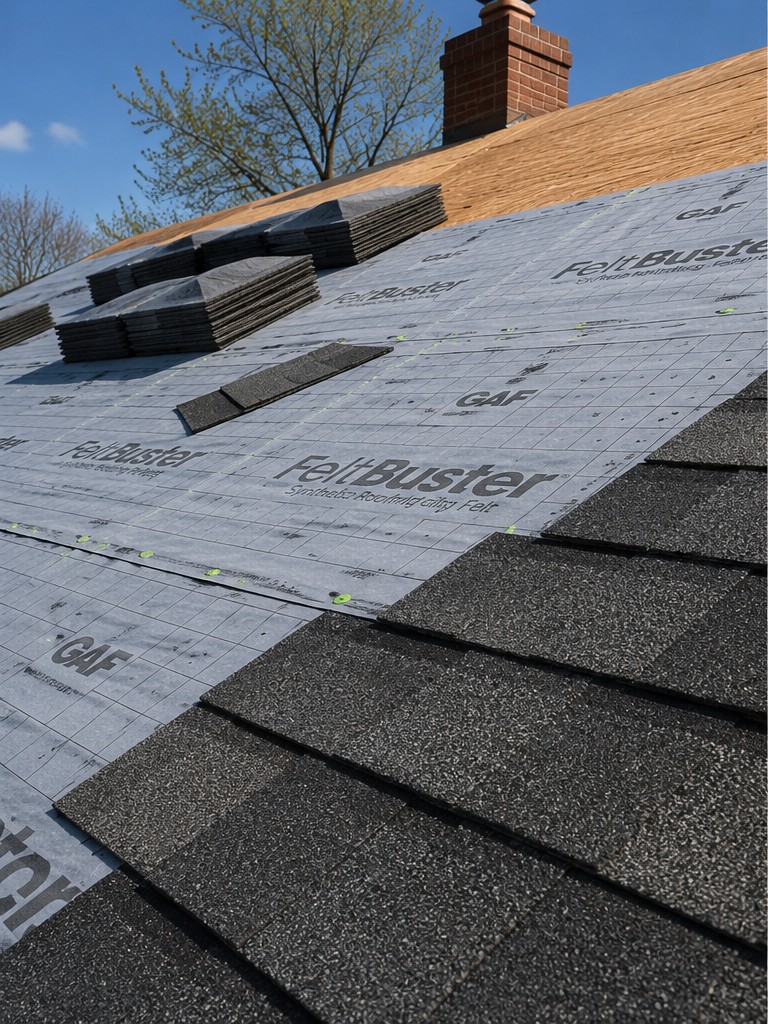
The historic village core along Winfield Road north of the Union Pacific rail line contains Winfield's oldest residential housing — primarily modest ranch homes, bungalows, and the occasional two-story on lots developed between the 1940s and late 1960s. These homes share several roofing characteristics: low to moderate slopes (4:12 to 6:12), original brick chimneys with deteriorated clay flue liners, and roof-to-wall transitions at additions that were rarely detailed with durable flashings. Chimney flashing failures are the single most common source of active roof leaks in this neighborhood. Many of these properties have also never had adequate attic ventilation installed — original construction frequently used only gable vents, which are inadequate for balanced airflow under modern codes. Any re-roofing estimate for a home in this area should include a chimney condition assessment and a ventilation plan.
South Winfield Ranch Subdivisions
Geneva Rd / Jewell Rd Corridors — 1965–1985
Highest Volume
The south and central Winfield ranch subdivisions developed along the Geneva Road and Jewell Road corridors represent the largest single segment of Winfield's housing stock. These 1965–1985 ranch and split-level homes typically feature 1,400–2,000 square foot footprints on relatively flat lots, with 4:12 to 6:12 rooflines and a mix of 3-tab and early architectural shingles. The 3-tab roofs installed in this era — many between 1990 and 2005 as first replacements — are now 20 to 35 years old. This cohort represents the primary replacement demand in Winfield's current roofing market. Hail damage from the 2017 and 2020 events is present on a significant number of these roofs; many were underassessed or never assessed after those events. The proximity of some south Winfield lots to the West Branch DuPage River 100-year floodplain also affects how downspout discharge must be managed — an issue that frequently comes up in Village permit review for homes near the river corridor.
West Winfield — Newer Colonials
Gary Ave / Windsor Dr Area — 1985–2000
Mid-Era
West Winfield's 1985–2000 colonial and two-story construction presents a different roofing profile from the ranch era. These homes — typically 2,000–2,800 square feet on larger lots — have steeper roof pitches (7:12 to 10:12), more complex valley and hip geometry, and generally better ventilation than older homes due to post-1993 Illinois energy code improvements. However, the 1985–1995 cohort frequently used galvanized steel flashings at chimneys, valleys, and pipe boots that have now been in service for 30 to 40 years. Galvanized steel flashings have a service life of approximately 20 to 25 years in Illinois's freeze-thaw climate; corrosion-related flashing failures are the predominant source of active leaks in this neighborhood. Dormer cheek walls — common in west Winfield's colonial stock — are a secondary failure zone where ice dam infiltration and flashing deterioration combine.
East Winfield — Post-2000 Development
Kautz Rd / Winfield Square — 2000–Present
Newest Stock
East Winfield's post-2000 development near Kautz Road and Winfield Square is the community's youngest residential housing, built to modern IRC standards with better-specified ventilation, ice-and-water shield coverage, and architectural shingles. These roofs are generally in good condition, but the 2022 and 2020 hail events affected east Winfield directly — and the Class 3 standard architectural shingles commonly installed in this era are susceptible to functional hail damage from 1.25" or larger stones. Homeowners in this area who did not file post-2022 storm claims should have an inspection to assess whether insurance-compensable damage is present before the claim window closes. Additionally, first-generation post-2000 roof replacements are now reaching 20+ years of age in the earliest-built east Winfield homes.
One Call Gets a Winfield Crew On Your Roof
Written estimates within 48 hours, GAF Master Elite® certified installation, and a crew that knows Winfield's permit process cold.
We Handle the Village of Winfield Permit Process From Application Through Final Inspection Sign-Off
The Village of Winfield's Community Development Department requires a building permit for all full roof replacements. Permit applications must include contractor license documentation, certificate of general liability and workers' compensation insurance, and a written scope of work. Inspections are conducted by Village building inspectors and must pass before final payment is released by the homeowner under the standard Village process. Unlike some DuPage County municipalities, Winfield's permit process is managed in-house and is generally efficient — turnaround from application to issued permit is typically 5 to 10 business days for a straightforward residential re-roof.
All work we perform in Winfield is executed to the 2021 International Residential Code (IRC) as locally amended. Key code-compliance items that affect Winfield re-roofing projects include: ice-and-water shield installation from the eave edge to a point 24 inches inside the interior warm wall (required on all slopes under 4:12, and strongly advisable on all Winfield ranch homes regardless of slope given their ice dam history); minimum ventilation ratio of 1:150 net free area (or 1:300 with balanced intake and exhaust) per IRC Section R806; and drip edge metal at all eaves and rakes. We do not skip any of these items to reduce estimate cost.
Schedule a free Winfield inspectionWhat's Required for a Winfield Roofing Permit
Illinois Roofing Contractor License, general liability ($1M minimum), and workers' compensation certificate on file with the Village.
Material specification, square footage, decking condition note, ventilation plan, and flashing replacement scope submitted with application.
Village inspector must view exposed deck before underlayment is installed. We schedule this inspection immediately at tear-off and build it into our project sequencing.
Village issues a certificate of occupancy sign-off on file. This is a required document for real estate transactions and FHA/VA lending inspections.
Note for home sellers: A roof replacement completed without a Village of Winfield permit is a required disclosure item in an Illinois real estate transaction. Unpermitted roofing work can delay or kill closings when a buyer's lender or attorney pulls permit records. All our Winfield projects are fully permitted and inspected.
Every Service Your Winfield Roof May Need — Managed by the Same Team Start to Finish
Roof Replacement
Full tear-off and replacement for Winfield's 1960s–2000s housing stock. GAF Timberline HDZ® and ArmorShield II® Class 4 options available. All projects permitted with the Village of Winfield and completed to 2021 IRC. Golden Pledge® 50-year warranty available through our GAF Master Elite® status.
Roof Repair
Leak investigation and targeted repair across all Winfield construction eras. Chimney step and counter-flashing, pipe boots, valley metal, dormer cheek walls, and addition transitions. Written repair scope with honest remaining-life assessment — we tell you when a repair doesn't make financial sense.
Storm Damage & Claims
Hail and wind damage documentation for Winfield 60190 properties. NOAA event cross-referencing, on-roof functional damage documentation, adjuster accompaniment, and Xactimate supplement filing. We have experience with every major carrier operating in northern DuPage County.
Asphalt Shingles
Full GAF product line including Timberline HDZ®, Timberline ArmorShield II® Class 4, and designer series products. Class 4 impact-resistant shingles are increasingly the right choice for Winfield homeowners — premium discounts from State Farm, Allstate, and Farmers typically recover the upgrade cost in 4 to 6 years.
Gutters & Downspouts
Seamless aluminum gutter installation and storm damage replacement. Hail-dented gutters are one of the most consistently underpaid line items in DuPage County insurance claims — we document and include them in every claim scope. For homes near the West Branch DuPage River corridor, downspout discharge routing is reviewed for Village compliance.
Roof Inspections
Free 30-point inspections for Winfield homeowners — post-storm, pre-listing, pre-purchase, and annual maintenance. Written condition report with photos, A–F condition grade, remaining useful life estimate, and ventilation assessment. DuPage County insurer-accepted documentation format.
What Our Work in Winfield Actually Looks Like
We've completed more than 150 roofing projects across Winfield's 60190 ZIP code. These representative examples reflect the three most common scenarios we manage in the Winfield market.
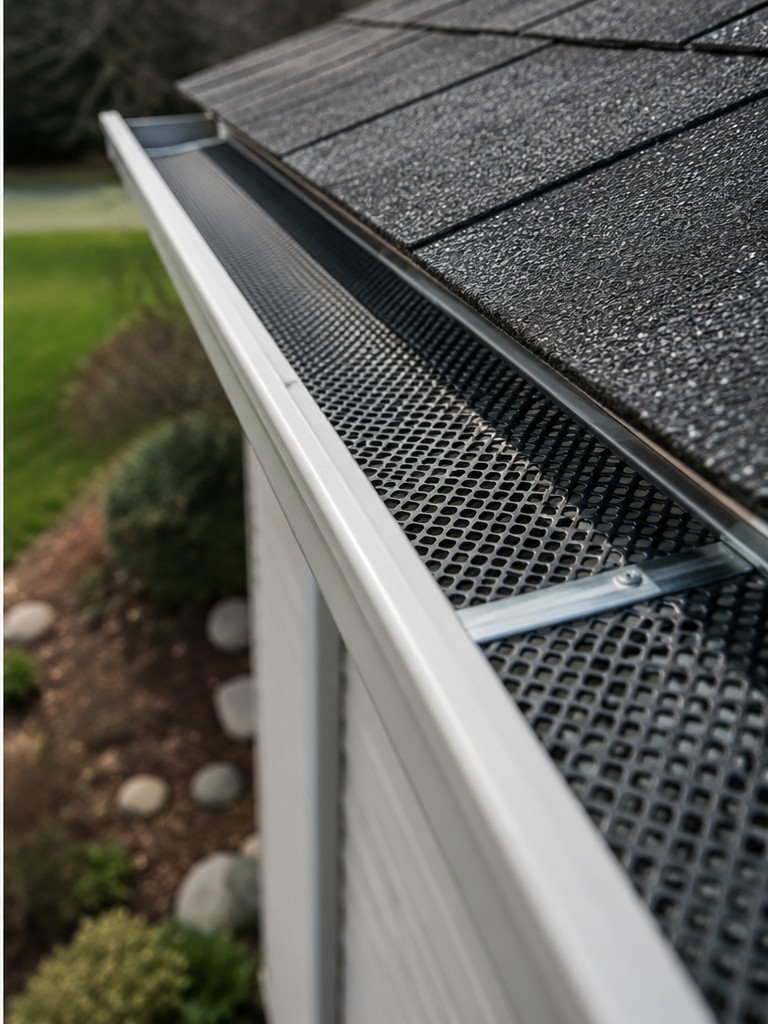
Homeowner contacted us after dented gutters following the July 2022 storm prompted them to have the roof looked at. State Farm's initial drive-by estimate missed two roof planes entirely and used an incorrect 1,400 sq ft measurement on a 1,800 sq ft footprint. On-roof inspection documented 40+ functional hail strikes on the main field, bruising and granule loss consistent with 1.50" hail, and secondary damage to all gutters, fascia, and three gable vents. We submitted a supplement with correct measurements, documented a pre-existing pipe boot failure as storm-accelerated damage, and included the full gutter system. Final approved scope came in $8,400 above the initial estimate. Completed with GAF Timberline ArmorShield II® Class 4 — triggering a 22% premium discount from State Farm that will pay back the upgrade cost in under 5 years.
Homeowner had visible ceiling staining in the master bedroom and kitchen after three consecutive winters of ice dam events. Country Financial had paid a prior interior water damage claim two years earlier but had not required ventilation correction. Our inspection found the original gable-vent-only attic ventilation system providing approximately 1:450 effective area — well below the 1:150 IRC requirement — and original blown cellulose insulation compressed to an estimated R-14. We documented the ventilation deficiency independently from the insurance claim (to avoid the carrier using it to deny future claims), coordinated ice-and-water shield extension to 36 inches inside the warm wall during re-roofing, and installed continuous ridge vent and four new soffit baffles to correct the ventilation ratio. Country Financial covered the roof replacement under the HO-3 water damage peril. The ventilation correction was paid for separately by the homeowner — and the ice dam events have not recurred.
Homeowner's real estate attorney recommended a pre-listing roof assessment after the buyer pool's attorneys had increasingly flagged roof age during due diligence on colonial-era homes in west Winfield. Our inspection found two dormer cheek wall flashing failures (galvanized steel at end-of-service-life), one failed step flashing section at the chimney, and granule loss consistent with the 2022 hail event that had never been assessed. We completed targeted flashing repairs, filed a post-storm insurance inspection with the homeowner's Allstate carrier — who approved a full replacement supplement — and provided a written pre-listing condition report with photos and a 5–7 year remaining life estimate for the listing disclosure package. Buyer's inspector noted the filed claim and condition report at closing. No roof-related price negotiation; the insurance claim provided a fully funded replacement for the buyers to complete post-sale. Total out-of-pocket repair cost before insurance: $1,400.
What Separates a Contractor Who Knows Winfield From One Who's Just Working Through the Area
60190 Market Expertise
We know Winfield's specific housing eras, failure patterns, and the Village's permit requirements. When we give you an estimate, it reflects the actual conditions on your specific block — not a generic DuPage County average.
GAF Master Elite® Certification
Fewer than 3% of U.S. roofing contractors hold this certification. It means we can offer the 50-year Golden Pledge® warranty that covers both materials and labor — the strongest warranty available on any GAF product in the market.
We Handle the Whole Permit Process
Application, decking inspection scheduling, and final sign-off — all managed by our team with the Village of Winfield's Community Development Department. You don't have to coordinate with the Village at any point in the project.
Adjuster Accompaniment
We attend every adjuster inspection in person. We present our documented scope and NOAA data directly to the adjuster — not as an afterthought in a supplement, but in real time at the inspection where it has the most influence on the approved scope.
Ventilation Assessment on Every Project
Winfield's older housing stock has a ventilation problem. We assess attic ventilation at every estimate and provide a written correction plan as part of every re-roofing proposal — because replacing a roof without fixing the ventilation is one of the most common and expensive mistakes in residential roofing.
Written Proposal in 48 Hours
After an on-site inspection, you receive a fully itemized written proposal within 48 hours. Line-item scope, material specifications, ventilation plan, permit cost, and estimated timeline — not a ballpark number over the phone.
Common Questions From Winfield Homeowners
Every roofing question we're asked in Winfield reflects the same underlying concerns — cost, claims, permits, and longevity. These are the questions we hear most often from 60190 homeowners, answered specifically for Winfield's market conditions.
How much does a roof replacement cost in Winfield, IL?
Winfield roof replacement costs typically range from $8,500 to $17,000 for a standard single-family home in the 60190 ZIP. Ranch homes in the 1,400–1,800 sq ft range are typically at the lower end of that range; colonial-era two-story homes with complex hip geometry run higher. Material choice matters significantly: standard architectural shingles (GAF Timberline HDZ®) are at the lower cost tier; Class 4 impact-resistant shingles (GAF ArmorShield II®) add approximately $1,500–$3,000 but trigger insurance premium discounts that typically recover the cost in 4–6 years. Decking replacement — common in Winfield's ranch-era housing where original 1/2" CDX panels show deterioration — adds $1.50–$2.50 per square foot depending on extent. We provide fully itemized written estimates at no charge after an on-site assessment. See our full cost guide for a detailed breakdown by material type.
My Winfield home is a 1970s ranch. Does it need special roofing considerations?
Yes — 1970s ranch homes in Winfield present a specific set of roofing considerations that don't apply to newer construction. First, attic ventilation: original ranch construction typically used only gable vents, which are inadequate for balanced airflow under modern code. Replacing the roof without upgrading to a continuous ridge-and-soffit ventilation system will typically void the shingle manufacturer's warranty and perpetuate existing ice dam problems. Second, ice-and-water shield: Illinois code requires shield coverage from the eave to 24 inches inside the warm wall; on a low-slope ranch with a history of ice dams, we extend this to 36 inches as a minimum. Third, decking condition: original 5/8" T&G board decking or early CDX plywood on these homes frequently shows deterioration that must be addressed before new shingles can be installed properly. We assess all of these items during our free inspection and include them in the written scope.
Does Winfield, IL require a permit for a roof replacement?
Yes. The Village of Winfield requires a building permit for all full residential roof replacements. The permit process involves submission of contractor credentials, insurance, and a scope of work; a mid-project inspection of the exposed decking before underlayment is installed; and a final inspection before sign-off. Roofing work completed without a permit in Winfield is a required disclosure item in Illinois real estate transactions and can delay or prevent closings when buyer's attorneys pull permit records. We handle all permit paperwork and coordinate both inspections directly with the Village — you don't need to interact with the Village's Community Development Department at any stage.
How do I know if my Winfield roof has hail damage from the 2022 storm?
Functional hail damage is almost never visible from the ground — it requires on-roof inspection to identify. The most reliable ground-level indicator is impact denting on aluminum gutters and fascia. If your gutters show round dents from the 2022 storm, there is a high probability that your shingles sustained functional damage as well — soft metals and standard Class 3 shingles reach their impact threshold at approximately the same hail size. On the roof surface, functional hail damage appears as areas of displaced granules with a dark bruised appearance at the impact center; it looks different from normal granule loss and from debris impact. The only documentation sufficient to support a DuPage County insurance claim is a professional on-roof inspection with photographs and NOAA event cross-referencing. Request a free post-storm inspection — we provide written documentation regardless of whether you proceed with a claim.
My Winfield home gets ice dams every winter. What's the correct fix?
The root cause of ice dams is almost always inadequate attic ventilation or insulation, not a roofing defect. Replacing the roof without correcting the underlying ventilation deficiency simply creates the same problem on new shingles — and critically, voids the shingle manufacturer's warranty, because every major manufacturer including GAF explicitly excludes ice dam damage caused by inadequate attic ventilation. The correct sequence is: (1) assess current insulation depth and ventilation ratio, (2) correct the ventilation by adding continuous ridge vent and soffit baffles to achieve the 1:150 IRC ratio, (3) add supplemental attic insulation if below R-38, and (4) replace the roof with extended ice-and-water shield coverage. In most Winfield ranch homes, steps 2 and 3 can be performed during the roofing project with minimal added cost. We include this assessment and a written correction plan in every estimate for Winfield's pre-1990 housing at no charge.
Which insurance companies handle most roof claims in Winfield?
In our experience managing claims across DuPage County's northern communities including Winfield, the most prevalent carriers are State Farm, Allstate, Country Financial, Farmers, and Erie Insurance. Each has distinct claim-handling tendencies: State Farm and Allstate use Xactimate pricing and respond best to HAAG Engineering functional damage language in inspection documentation. Country Financial's regional adjusters are generally more receptive to accompaniment and supplement negotiation than carriers using third-party inspection services. Farmers typically issues faster initial offers but with more conservative line items on secondary damage. If your initial claim offer seems low, do not accept it before requesting a supplemental inspection — first-pass underpayment is common in DuPage County's active hail market, and the supplemental process is designed to be used. We've managed claims with all of these carriers extensively and know what documentation format each one requires to maximize your approved scope.
What a Typical Winfield Roof Replacement Actually Costs — by Housing Type
These are representative ranges based on our completed Winfield projects. Every home is different — your final number depends on exact square footage, pitch, material selection, decking condition, and ventilation correction scope. We provide fully itemized written estimates after an on-site inspection.
1,400–1,800 sq ft footprint. Includes tear-off, decking inspection, ice-and-water shield, ventilation assessment. Architectural shingles. Permit included. Decking replacement, if needed, is additional.
2,000–2,800 sq ft footprint. Steeper pitch, hip and valley complexity, dormer cheeks. Full flashing replacement at chimney and all penetrations. Architectural or Class 4 shingles. Permit included.
2,500+ sq ft, complex rooflines, multiple hips or dormers. Class 4 shingles strongly recommended to capture carrier premium discounts. Skylights, gutters, and ventilation upgrades quoted separately if needed.
Insurance note for Winfield homeowners: If your roof sustained damage in the 2022 or 2020 hail events, your out-of-pocket cost may be substantially lower than these ranges — potentially limited to your deductible only. Class 4 shingle upgrades above the insurance-approved scope are typically a relatively small out-of-pocket line item that pays back quickly through premium discounts. Learn how insurance claims work or schedule a free inspection to assess whether you have a claim.
Roofing Services Across Northern DuPage County
Adjacent DuPage County seat with a large share of 1950s–1980s housing. Similar hail exposure and ice dam risk to Winfield's ranch stock.
Directly south of Winfield along the DuPage River corridor. Similar mid-century housing stock and storm exposure pattern.
Immediately north of Winfield on the DuPage / Kane county border. Working-class ranch housing stock with strong storm damage claim volume.
East of Winfield, high-density 1970s–1990s residential. Active market for both storm damage restoration and age-driven replacements.
Southeast of Winfield, with a high concentration of pre-1960 historics and mid-century colonials requiring specialized flashing and repair work.
Our home base. 20+ years and 800+ projects across all four Naperville ZIP codes, with the deepest HOA and permit knowledge in the market.
I-88 corridor community with significant 1980s–1990s housing and strong post-storm replacement demand following the 2022 northern DuPage events.
See our full map of served communities across DuPage, Will, and Kane counties.
Ready to Get Started on Your Winfield Roof?
Free on-site inspection, written proposal within 48 hours, and full Village of Winfield permit handling — from the DuPage County roofing team with 20 years of local experience.