Roofing Contractor
Glen Ellyn, IL
- Illinois Matching Law: Glen Ellyn's significant proportion of pre-war and mid-century homes — many with discontinued shingle profiles — frequently qualifies for full insurance-funded replacements after hail events. We cross-reference your shingle profile against current manufacturer availability at every post-storm inspection and document every qualifying discontinuation scenario.
- Historic Preservation Commission Expertise: Glen Ellyn's Landmark program is one of the most active in DuPage County — and the Commission's rules have a precise, important nuance for roofing: replacing a roof in the same material never requires HPC review, but changing to a different material always does. We confirm landmark status and material classification at every estimate for pre-1950 properties, and we carry approved alternative material documentation for HPC submissions.
- Lake Ellyn Waterfront Expertise: The Lake Ellyn neighborhood spans homes built from 1906 to 2003 on one of the most valuable residential parcels in DuPage County. Complex rooflines, decades of deferred maintenance layers, and premium replacement cost values require a different approach than a standard ranch in a post-war subdivision. We've worked on Lake Ellyn properties and understand what they require.
Glen Ellyn is one of the most architecturally distinctive communities in the western suburbs — a Village where the 1920s Plan Commission's preference for Old-English Tudor and Half-Timber styles still shapes the streetscape north of the Metra tracks, where Lake Ellyn's shoreline holds homes that date to 1906, and where the largest single housing era (1940–1959) produces the most active roofing market we serve anywhere in DuPage County. We've been active across all of Glen Ellyn since 2005, with over 350 completed projects in ZIP 60137 and deep familiarity with the Village's permit office, its Historic Preservation Commission procedures, and the specific failure patterns of each construction era.
Glen Ellyn Sits at the Eastern Entrance to DuPage County's Most Persistent Hail Corridor — and Its Mid-Century Housing Stock Has Absorbed Every Major Event
Glen Ellyn occupies a specific geographic position in DuPage County that makes it consistently susceptible to the same supercell storm systems that track northeast from the Fox River Valley toward the northern Chicago suburbs. Positioned between Wheaton to the west and Lombard to the east, the village sits at the point where storms moving along the primary DuPage hail corridor enter the denser eastern-DuPage residential fabric — and where wind speeds often remain elevated long enough to cause roofline damage after the hail portion of the event has passed. The June 2020 2.00" hail outbreak that originated over Naperville tracked northeast through Wheaton and directly across Glen Ellyn's residential core before continuing into Lombard. The July 2022 overnight system produced confirmed hail and three tornadoes across the Chicago metro with central DuPage directly in the path. The August 2020 Derecho brought straight-line winds exceeding 80 mph county-wide — a wind event whose roof damage we were still documenting in Glen Ellyn as late as 2022, when homeowners discovered wind-lifted and subsequently water-infiltrated sections on roofs that hadn't yet produced interior ceiling staining.
For Glen Ellyn's mid-century housing stock — the largest single construction era at 22% of all homes, built predominantly between 1940 and 1959 — storm exposure is compounded by age. Architectural shingles from second-replacement-cycle installations done in the early 2000s are now 20–25 years old, and the combination of original shallow roof geometry and accumulated storm strikes means many homes that haven't yet produced interior leaks are carrying functional hail damage that has not been claimed. We cross-reference your roof's documented history against NOAA event records for Glen Ellyn's ZIP code at every inspection, and we attend every adjuster visit to present documented evidence in person — on a DuPage County insurance claim, adjuster accompaniment is the single variable most correlated with approved scope completeness.
How we manage DuPage hail & wind claimsGlen Ellyn homeowners who settled insurance claims after the 2020 or 2022 events under RCV policies may have uncollected recoverable depreciation holdbacks. The collection window is typically 1–2 years from initial settlement — not from the storm date — and varies by carrier. A free post-storm inspection is the fastest way to determine whether you have outstanding claim value and what documentation your carrier requires to release the holdback.
Ice Dams in Glen Ellyn: The Tudor-Era Homes, Mid-Century Ranches, and Why Roosevelt Road Is the Village's Ice Dam Divide
Glen Ellyn's ice dam geography closely tracks its housing era geography — and both are divided by Roosevelt Road. The neighborhoods north of Roosevelt, which hold the Village's highest-value homes and its oldest residential stock, are also where ice dam risk is highest. The pre-war Tudor and Craftsman homes north of the Metra tracks — on the streets around Lake Ellyn, along Crescent Boulevard, and in the densely-treed blocks between Main Street and Park Boulevard — were designed with aesthetic steep-pitch geometry that actually drains snow load well, but their original attic assemblies have virtually no ridge ventilation and extremely limited soffit intake area. Heat escaping through these attics melts the mid-roof snowpack regardless of outside temperature, and the meltwater refreezes at the unheated eave overhang — which on Tudor-style homes is often deep and pronounced, creating a thermal dam geometry that produces ice buildup reliably every winter with more than three inches of accumulated snow pack.
The mid-century ranch neighborhoods — the 1940–1959 stock that represents Glen Ellyn's largest construction era, concentrated on the grid streets south of the downtown and in the Butterfield West and Glen Ellyn Manor areas — present a different but equally persistent ice dam profile. Shallow 3:12 to 5:12 roof pitches, minimal attic depths that were often retrofitted with blown insulation in the 1970s energy crisis, and soffit panels that were sealed during those same retrofits create a thermal condition where inadequate ventilation circulation allows the underside of the roof deck to warm above freezing even when exterior temperatures are well below it. The Village of Glen Ellyn's 2018 IRC adoption requires ice barriers at all eaves per local amendment — but this standard applies to new installations, not existing roofs that predate the requirement. We assess ice barrier coverage and ventilation net free area on every estimate in pre-1970 Glen Ellyn homes and include a written ventilation disclosure in every re-roofing proposal.
Schedule a winter damage assessmentLake Ellyn shoreline homes, Crescent Boulevard, Forest Avenue, Park Boulevard north of the tracks. The 1920s Plan Commission–influenced Tudor and Half-Timber homes have deep eave overhangs — exactly the geometry where ice dam formation is most damaging. Original board sheathing, no ridge ventilation, minimal soffit area. Many of these homes have had ice dam repairs at the same eave locations multiple times — chimney step flashing, skylight surround, and north-facing dormer head flashing are the consistent active leak sources after dam formation.
Glen Ellyn's largest housing era — the shallow-pitch ranches and Cape Cods south of downtown and in the early Butterfield-area neighborhoods. Soffit ventilation sealed in 70%+ of homes we inspect in this era, original blown insulation well below current R-49 code. Ice barriers required per 2018 IRC amendment — but the critical insight is that ice barriers protect the roof deck, not the ventilation system. Without the ventilation correction, ice barriers slow the leak; they do not eliminate the dam.
The transitional neighborhoods between the mid-century core and the post-1975 developments — Oak Hill, parts of Northside, and the north Glen Ellyn areas. Split-level geometry creates the same multi-eave-level ice dam concentration point seen in Wheaton's Farnham area. The lower family room eave is where ice initiates; the leak appears at the adjoining upper wall assembly, often misdiagnosed as a wall or window flashing issue rather than a roof ventilation problem.
2018 IRC ice barrier note: The Village of Glen Ellyn's adoption of the 2018 International Residential Code with local amendments specifically requires ice barriers at all eaves. We install full eave coverage with self-adhering modified bitumen ice-and-water shield as standard on every Glen Ellyn re-roofing project — exceeding the code minimum in all cases, not merely meeting it.
Lake Ellyn to Butterfield Road: Four Distinct Eras, Four Distinct Roofing Profiles
Glen Ellyn's housing stock ranges from pre-war lakeside homes built in 1906 to 1980s–90s developments along the Butterfield Road corridor — and the Village's own planning data confirms that no single construction era dominates. Every neighborhood we work in carries its own failure pattern, its own permit context, and in some cases its own Historic Preservation Commission exposure. We know all of them.
Glen Ellyn Landmark Homeowner Alert — The Most Important Roofing Rule You May Not Know
Glen Ellyn's Historic Preservation Commission has a precise rule that affects every landmark property re-roofing decision: replacing a roof in the exact same material never requires HPC review — it is treated as in-kind replacement. But changing to a different roofing material always requires Commission review and approval, even if the alternative is functionally superior. This means an asphalt-shingled landmark property can be re-roofed in asphalt with no HPC process, but upgrading to a Class 4 impact-resistant shingle product with a different profile or changing to metal roofing requires an application. We identify your landmark status and current roof material at every estimate in Glen Ellyn's pre-1950 zones and advise you on whether your preferred product triggers the review process before any work is planned.
The Lake Ellyn neighborhood spans homes built between 1906 and 2003 — a remarkable range that puts an Edwardian-era house next to a 1970s contemporary on the same shoreline block. The early homes (pre-1940) are where the most complex roofing work occurs: original wood sheathing, clay tile and slate original materials on some properties, steep-pitch Tudor geometry with complex dormers and hip-to-gable transitions, and chimney flashing that has cycled through multiple replacement attempts. The downtown historic core along Crescent Boulevard and Pennsylvania Avenue includes properties influenced by the 1920s Plan Commission's preference for Old-English Tudor and Half-Timber styles — many of which are on the Village's landmarked properties list or are adjacent to landmarked structures. Average annual property tax in the Lake Ellyn subdivision exceeds $15,600 — every roofing decision here carries significant replacement cost value implications that warrant GAF Golden Pledge® coverage consideration. We are familiar with the specific HPC application process for Lake Ellyn landmark properties and have successfully submitted material change applications for properties where homeowners wanted to upgrade from original materials to modern equivalent profiles.
Glen Ellyn's largest single housing era — the 1940–1959 ranches, Cape Cods, and American Foursquares that form the dense residential fabric south and east of the downtown — is also the Village's most active roofing market. These homes are on their second or third roofing system. The most consistent failure profile: neoprene pipe boot collars cracked and leaking (endemic in this era's stock), valley metal oxidation on 1990s–era re-roofing installations, and inadequate soffit ventilation producing chronic attic moisture accumulation that shortens shingle life to 15–18 years regardless of product quality. The Class 4 economics are favorable in this zone — simple rooflines with minimal penetrations mean installation cost increments are low relative to the annual premium savings Glen Ellyn's carriers offer. We have documented State Farm, Allstate, and Country Financial discounts of 20–26% on the wind/hail rider for certified Class 4 Glen Ellyn homes, paying back the upgrade cost in 4–6 years on policies in this ZIP code.
The premium north Glen Ellyn subdivisions — Northside, Northeast, and Oak Hill — represent the Village's highest-value residential zone north of the downtown, priced from the mid-$600Ks to over $700K. These developments were built predominantly between the 1960s and 1980s, with a mixture of two-story colonials, contemporaries, and larger custom homes on generous lots adjacent to the Illinois Prairie Path and the Great Western Trail. Many of these homes are on their first replacement cycle — original or first-replaced shingles from 1990s–2005 installations are now 20–30 years old and increasingly showing storm-accelerated deterioration from the 2017, 2020, and 2022 events. Stacy's Corners — the Village's original commercial center at Geneva Road, St. Charles Road, and Main Street, named for the tavern Moses Stacy built at this crossroads in 1846 — anchors the north Glen Ellyn area and several of the residential streets immediately surrounding it date to the early 1960s. The premium resale market in this zone means roof condition is a first-priority buyer inspection item and a written pre-listing condition report materially protects sale price.
The southern and western portions of Glen Ellyn — developed primarily from the mid-1970s through the 1990s — include the Butterfield West, Glen Ellyn Manor, Woodglen/Baker Hill, and Arboretum Estates subdivisions. These are larger single-family homes with more complex roofline geometry than the mid-century grid neighborhoods, and they are now entering their first or early second replacement cycle. The College of DuPage campus sits in this zone at the corner of Fawell Boulevard and Lambert Road — several residential streets adjacent to the campus, including those in the immediate Roosevelt Road corridor, contain homes that are on the boundary between the Village's more active historical enforcement zone (north) and the newer development area (south). HOA governance varies across these subdivisions: Arboretum Estates and Woodglen/Baker Hill have active HOA boards; Butterfield West and Glen Ellyn Manor are largely non-HOA. We confirm HOA status at every estimate in this zone. The premium pricing in Arboretum Estates and Woodglen/Baker Hill — comparable to Northside and Oak Hill — makes GAF Golden Pledge® 50-year warranty coverage standard rather than optional on projects in these neighborhoods.
One Call Gets a Glen Ellyn Crew On Your Roof
Written estimates within 48 hours, GAF Master Elite® certified installation, and a crew that knows Glen Ellyn's permit process cold.
Village of Glen Ellyn Roofing Permits — and the One Historic Preservation Rule Every Homeowner Should Know Before Choosing Materials
The Village of Glen Ellyn requires a building permit for all roof replacements and new roof coverings, processed through the Community Development Department at 535 Duane Street, Glen Ellyn, IL 60137 (phone: 630-547-5250). Glen Ellyn operates on its own standalone permit portal at glenellyn.onlama.com, with a dedicated "Roof Covering / Gutters / Soffits" permit category for standalone roofing work. All contractors must comply with license and insurance requirements under Village Code Section 4-1-11 — we maintain full current compliance and pull all permits before any work begins. Glen Ellyn has adopted the 2018 International Residential Code (2018 IRC) with local amendments, which specifically includes the requirement that ice barriers be installed at all eaves. This is one code cycle behind Wheaton's 2024 IRC — and it means Glen Ellyn's attic insulation standard differs from its neighbor to the west.
The most important permit-adjacent rule for Glen Ellyn homeowners is the Historic Preservation Commission material change requirement. On any property with current Glen Ellyn Landmark designation, a permit for a new roof is required — but the HPC review requirement depends entirely on material: replacing your roof with the same material as the existing roof requires no HPC review (it is classified as in-kind replacement). Installing a different roofing material — including a different shingle profile, changing from asphalt to metal, or changing pitch — requires HPC application and Commission approval before work begins. Color is not regulated. We confirm landmark status and document existing roof material at every estimate for properties in the pre-1950 zones. We have experience preparing and submitting HPC material change applications directly with the Community Development Department at 630-547-5250.
We provide all Glen Ellyn homeowners with the Illinois Home Repair and Remodeling Act documentation as required by state law, and include full permit management and — where applicable — HPC material review coordination at no additional charge on every project.
| Requirement | Village Standard | Our Performance | Why This Matters |
|---|---|---|---|
| Ice & Water Shield | Required at eaves per 2018 IRC local amendment | Exceeds — full eave coverage standard install | Critical on Tudor-era and ranch ice dam homes. |
| Drip Edge | Mandatory at eaves and rakes | Standard heavy-gauge on every project | Prevents fascia rot on pre-war soffits. |
| Building Code | 2018 ICC IRC w/ local amendments | All installs spec'd to 2018 IRC + amendments | One cycle behind Wheaton's 2024 IRC — know the diff. |
| Contractor Compliance | Village Code § 4-1-11 license & insurance | Current — all docs on file, verifiable | Verify at Community Dev. Dept. before signing. |
| Landmark — Same Material | Permit required; NO HPC review | Processed as standard permit — fastest timeline | In-kind roofing on landmarks needs no Commission approval. |
| Landmark — New Material | Permit + HPC Application required | We prepare and submit HPC application | Material change without review = stop-work order risk. |
Glen Ellyn's Roosevelt Road corridor — where over 45,000 vehicles pass through daily — contains a significant inventory of commercial and mixed-use properties with flat and low-slope roof systems. The College of DuPage campus along Fawell Boulevard is the Village's largest single institutional property. Commercial roofing permits in Glen Ellyn require Community Development review with full plan submission through the Village portal. We manage commercial permit applications directly for Roosevelt Road and Butterfield Road corridor properties. Occupied retail and campus scheduling and tenant coordination are standard scope items on every commercial project in Glen Ellyn.
The Most Common Leak Sources in Glen Ellyn — by Era, Neighborhood, and What Other Contractors Miss on the First Visit
Three hundred fifty projects across Glen Ellyn's four construction eras gives us granular pattern recognition that a contractor who covers 15 suburbs equally simply cannot match. We know what fails first in a Lake Ellyn Tudor-era home, what's leaking in a 1952 ranch that last saw work in 2003, and how the Northside colonials are behaving post-2020 storm. That knowledge means we identify the actual problem — not just the visible symptom — on the first call.
Pre-War & Tudor-Era Failures
For Glen Ellyn's Lake Ellyn shoreline and downtown core properties, the dominant failure sequence is consistent and predictable: chimney step flashing fails first after 60–80 freeze-thaw cycles on properties that have never had full flashing replacement, only re-caulking; counter flashing follows within 3–5 years; interior staining at the chimney breast emerges only after both have failed and the underlayment is saturated. The Tudor-style homes with pronounced deep eave overhangs have a secondary failure mode: ice dam water working laterally under the starter course and penetrating through the soffit board at the wall top plate — this stain appears on the interior wall, not the ceiling, and is systematically misdiagnosed as a window leak by contractors who don't get on the roof. On every Lake Ellyn repair call, we photograph the eave from above, below, and at the fascia line before writing a scope — there are always at least two active pathways, not one.
Roof repair servicesMid-Century & 1960s–1980s Failures
For the 1940–1959 ranch and Cape Cod stock — Glen Ellyn's most populous housing era — the dominant failure mode is pipe boot collar cracking on stacks that were never replaced at the last re-roofing, and valley metal from 1990s installations that has oxidized through the sealant lap. These are slow leaks that appear as light ceiling staining during heavy rain events and disappear in dry weather, making them easy to ignore — and most difficult to document for insurance purposes. For the Northside and Oak Hill 1960s–1980s colonials, post-2020 storm repairs that were done quickly and without full scope completion are producing secondary leak calls at valley sections, dormer side walls, and pipe boots that were undisturbed by the original repair contractor. We inspect the entire roof surface on every repair call — not just the reported symptom location — and we generate a written condition report that documents every active and at-risk location so the homeowner has a complete picture in a single visit.
Roof repair servicesGlen Ellyn Repair vs. Replace — The North-of-Roosevelt Calculus
Glen Ellyn's median home value of approximately $555,000 — and the Village's own planning data confirming that properties north of Roosevelt Road carry a measurable premium above the south side — makes the repair vs. replace decision more financially consequential than in most DuPage suburbs. A pre-listing written condition report with a remaining-useful-life estimate in a DuPage County real estate attorney–accepted format is the single document most likely to protect a Glen Ellyn homeowner's net sale price. We've seen north Glen Ellyn homes lose $20,000 to $30,000 in buyer negotiation because a buyer's inspector flagged a roof with no context; we've seen that same inspection outcome neutralized by a pre-listing written assessment from a credentialed roofing contractor who inspected the property, documented its current condition, and issued a professional remaining-life estimate. We provide this document at no additional charge on any project — and as a standalone service for homeowners approaching a listing at any price point.
Repair vs. replace guideRoofing Services We Provide in Glen Ellyn
Roof Replacement
Full tear-off and replacement across all Glen Ellyn neighborhoods and ZIP 60137. GAF Master Elite® certified with Golden Pledge® 50-year warranty available — covering both labor and materials for the roof's lifetime. From a 1,500 sq ft 1950s ranch to a 4,000+ sq ft Lake Ellyn Tudor-era home. HPC material review handled directly for landmark properties.
Roof Repair
Leak investigation and repair across all Glen Ellyn construction eras. Pre-war chimney step flashing, mid-century pipe boots and valley metal, 1970s split-level eave geometry, post-storm secondary failures in Northside and Oak Hill colonials. Full written condition report on every repair call — not just the symptom location.
Storm Damage & Claims
Hail and wind damage documentation for 60137 properties. We attend your adjuster inspection, submit Xactimate supplements when initial scopes are undervalued, and have experience with all carriers active in Glen Ellyn — State Farm, Allstate, Farmers, Country Financial, Erie, USAA, and American Family.
Asphalt Shingles
Full GAF product line including Timberline HDZ®, ArmorShield II® Class 4 impact-resistant, and designer series for Glen Ellyn's Tudor-era and Lake Ellyn premium properties. Physical samples at every estimate. For landmark properties: we carry HPC-reviewed alternative material documentation for approved profile substitutions.
Gutters & Downspouts
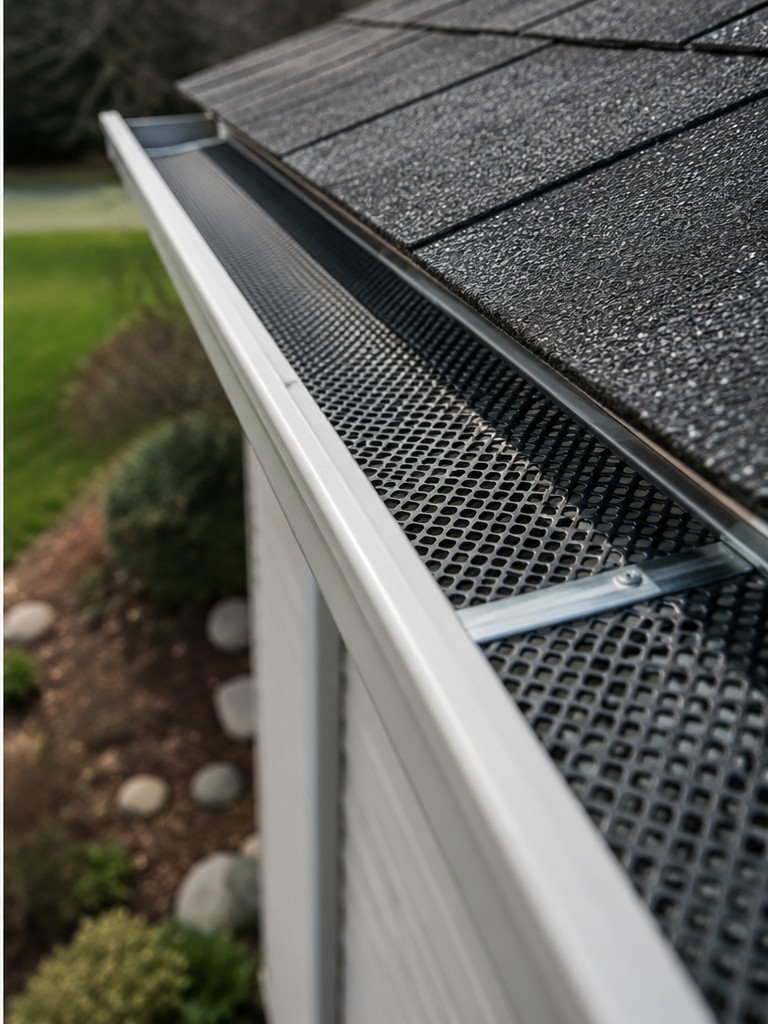
Seamless aluminum gutter installation and hail impact replacement. Gutter denting from the 2020 and 2022 events is consistently underpaid in Glen Ellyn insurance claims — we document every impact-dented linear foot. Copper gutter options available for Lake Ellyn historic-zone properties where original copper profiles require matching.
Roof Inspections
Free 30-point inspections — post-storm, pre-listing, pre-purchase, and annual maintenance. Written condition report with photos, A–F condition grade, and remaining-life estimate in DuPage County real estate attorney–accepted format. For Glen Ellyn's $555K+ median market, this document is critically protective of sale price in a Village where buyers' inspectors are thorough.
What Our Work in Glen Ellyn Actually Looks Like
Over 350 completed projects in ZIP 60137 since 2005 — from Lake Ellyn landmark homes to mid-century ranches on the grid streets to Northside colonials. These three examples reflect the scenarios we manage most frequently in Glen Ellyn.

1931 Tudor-style home on a Lake Ellyn shoreline lot — one of the Village's landmarked properties. The original clay tile roof had been replaced in a prior ownership with asphalt shingles in a profile that was technically in-kind for purposes of the previous HPC assessment, but the homeowner wanted to upgrade to a Class 4 impact-resistant product with a different profile and a lighter natural cedar tone to complement the restored half-timber exterior. Because this was a new material profile — not in-kind — we prepared and submitted a full HPC Application for Exterior Alteration of Landmarked Property, including samples of the proposed GAF Camelot II® designer shingle (which closely replicates the visual weight of the original tile profile in a storm-resistant format), photographs of comparable HPC-approved projects, and the material specifications from the Illinois Secretary of the Interior's rehabilitation guidelines. The Commission approved the submission. The homeowner received a 29% State Farm premium reduction on the wind/hail rider for the Class 4 classification, which, on a Lake Ellyn property at full replacement cost value, represented $890 per year in savings. GAF Golden Pledge® 50-year warranty issued.
1954 ranch on a grid street in Glen Ellyn's mid-century core — re-roofed in 2006 with an Owens Corning Trudefinition shingle profile that was discontinued from production in 2015. Country Financial's initial hail inspection scope after June 2020 classified the granule displacement as cosmetic and denied functional damage, citing insufficient hail size at that specific ZIP code cross-referenced against their internal hail grid. We documented 42 verified functional impact points using HAAG methodology, commissioned a NOAA 2.00" hail trace for the June 2020 event that placed the subject property within the confirmed damage swath, and invoked the Illinois Matching Law based on the discontinued profile — requiring Country Financial to fund a complete replacement on all connected roof planes rather than patching with a non-matching current production product. Claim reopened, approved at full RCV. The homeowner's out-of-pocket was their deductible. Country Financial offered a $280/yr premium reduction for upgrading to a Class 4 product at replacement — which the homeowner accepted. GAF Timberline ArmorShield II® installed.
Northside colonial listed at $715,000 — buyer's inspector flagged three items: missing pipe boot collar seal, visible granule loss in one valley section, and a "possible step flashing issue at the left dormer." The buyer had submitted a $14,500 roof-credit request to the seller. We were called by the listing agent to provide a second assessment. Our inspection found: (1) the pipe boot was cracked and active — a $220 repair; (2) the valley granule loss was aesthetic, not functional — the metal was intact and properly lapped with no active leak path; (3) the "possible step flashing issue" was a cosmetic tar overapplication from a previous contractor covering what appeared to be a flashing but was actually a fully intact step-flashing that had been cosmetically sealed in a prior repair. Total repair scope: $220. We issued a written condition report documenting all three items with photographs, a professional assessment of the non-active items, a remaining-life estimate of 8–11 years on the existing roof, and contractor certification. The buyers withdrew the $14,500 credit request. The sale closed at the listed price.
What Glen Ellyn Homeowners Say
Verified Google reviews from Glen Ellyn, IL homeowners. See all 312+ reviews →
"Our 1931 Tudor on Lake Ellyn Drive is a Village landmark and we were very nervous about the HPC process for switching shingle profiles. Naperville Roofing Crew prepared the entire Commission application for us, showed up at the HPC meeting with the sample materials, and got it approved without any back-and-forth. The new Camelot II shingles look exactly right for a Tudor home — and the State Farm discount on the Class 4 roof is almost $900 a year. We're absolutely thrilled. This is exactly the kind of expertise this neighborhood needs."
"Country Financial denied our June 2020 claim saying the hail wasn't big enough for our area. Naperville Roofing Crew disagreed, documented 42 impact points, pulled NOAA data showing exactly where the 2-inch hail track crossed our address, and invoked the Illinois Matching Law because our shingle profile had been discontinued. Country Financial reversed the denial and paid full replacement. I had no idea any of that was possible. Our out-of-pocket was our deductible. These are the people you want if your claim gets denied."
"Our listing agent called Naperville Roofing Pros after the buyers' inspector flagged our roof and the buyers asked for $14,500 off the sale price. The inspection from Naperville Roofing Crew found one $220 pipe boot repair and documented everything else as fine. They issued a written report that our attorney could use. The buyers withdrew the credit request and we closed at full price. That $220 repair saved us $14,500. I can't say enough about how professionally they handled the whole thing under time pressure."
Roofing FAQ for Glen Ellyn Homeowners
Does the Glen Ellyn Historic Preservation Commission control what roofing materials I can use?
Only if your property has current Glen Ellyn Landmark designation — and only if you are changing to a different roofing material. The Glen Ellyn HPC has a precise written rule: replacing your roof with the same material (e.g., asphalt to asphalt, even if a different brand or product line) is classified as in-kind replacement and requires no HPC review — only a standard building permit. However, if you want to change to a different material (e.g., asphalt to metal, asphalt to a significantly different profile that would change the visual character, or any change in pitch), an HPC Application for Exterior Alteration must be submitted and approved before work begins. Color is not regulated. If you are unsure whether your property is landmarked, the Village's list of landmarked properties is available through the Community Development Department at 630-547-5250. We confirm landmark status at every estimate for pre-1950 properties in Glen Ellyn and, where HPC review is required, we prepare and submit the application directly.
Does Glen Ellyn require a building permit for roof replacement?
Yes. The Village of Glen Ellyn requires a building permit for all roof replacements and new roof covering installations, processed through the Community Development Department at 535 Duane Street (phone: 630-547-5250, Monday through Friday, 8:00 a.m. to 4:30 p.m.). Glen Ellyn operates its own standalone permit portal at glenellyn.onlama.com with a dedicated "Roof Covering / Gutters / Soffits" permit category for standalone roofing projects. All contractors must comply with license and insurance requirements under Village Code Section 4-1-11 — we maintain current compliance with all requirements and pull permits before any work begins. The permit record is important documentation for Glen Ellyn's active resale market — buyer's attorneys in DuPage County routinely check permit history during due diligence, and unpermitted roofing work creates a required disclosure obligation that surfaces in almost every real estate transaction. We include permit management at no additional charge on every project.
How much does roof replacement cost in Glen Ellyn?
Glen Ellyn's median home value of approximately $555,000 and its significant stock of premium north-of-Roosevelt properties translate to replacement costs that trend higher than the DuPage average. A 1940s–1950s ranch (1,400–2,200 sq ft, simple pitch, minimal penetrations) typically runs $9,500–$14,000 with GAF Timberline HDZ® including permit, tear-off, ice-and-water shield to full eave per Village requirement, and all flashings. A Northside or Oak Hill colonial (2,400–3,200 sq ft, moderate complexity) runs $15,000–$22,000. Lake Ellyn and Northside premium properties with complex Tudor or custom geometry range from $22,000 to $40,000+. The GAF Golden Pledge® 50-year warranty, covering both labor and materials, is available on all replacement projects and is standard on Lake Ellyn and north Glen Ellyn premium homes where replacement cost values warrant it. For storm-damage replacements, insurance typically covers RCV less your deductible on an RCV policy. See our 2026 DuPage County Roof Replacement Cost Guide for current Xactimate pricing.
What building code does Glen Ellyn use for roofing — and how does it differ from Wheaton?
Glen Ellyn has adopted the 2018 International Residential Code (2018 IRC) with local amendments — one full code cycle behind Wheaton, which adopted the 2024 IRC on March 1, 2025. The most consequential difference for roofing: Glen Ellyn's 2018 IRC requires ice barriers at all eaves (explicitly required by local amendment), which we install as self-adhering modified bitumen ice-and-water shield to full eave coverage on every project. The attic insulation standard under 2018 IRC is lower than Wheaton's 2024 IRC requirement — but the ice barrier mandate means every Glen Ellyn re-roofing project we complete has full eave protection regardless of the insulation level in the attic. If the Village updates its code adoption in a future ordinance cycle, the attic insulation standard will increase. For landmark properties specifically, the permit process triggers an additional HPC review requirement if material changes are proposed (see the FAQ on landmark properties above). Questions about Glen Ellyn's current adopted codes are answered by the Community Development Department at 630-547-5250.
Is it worth upgrading to Class 4 impact-resistant shingles in Glen Ellyn?
For most Glen Ellyn homeowners, yes — and for landmark properties, the HPC material change process is worth navigating to get there. The Class 4 upgrade adds $1,500–$4,500 to a standard Glen Ellyn replacement depending on roof complexity. State Farm, Allstate, Country Financial, and Farmers offer premium discounts of 20–30% on the wind/hail portion of the homeowners policy for certified Class 4 roofs. On Glen Ellyn policies — which are higher than average due to elevated home values — annual premium savings of $350–$900 are achievable. Payback on the upgrade cost ranges from 3 to 7 years depending on roof size and policy premium. For non-landmark Glen Ellyn properties, this calculation is straightforward — no HPC process, just a material selection at estimate time. For landmark properties, the HPC application adds a few weeks but the long-term economics are identical. We run the specific payback calculation at every estimate. See our full Illinois insurance and Class 4 guide for carrier-specific discount details.
I have an ice dam issue every winter in my Glen Ellyn home. What actually causes this?
Ice dams form when heat escaping through the attic system melts snow on the upper roof, and the meltwater runs to the cold eave and refreezes. The root cause is almost always inadequate attic ventilation — either blocked soffit intake venting (extremely common in Glen Ellyn's mid-century ranch stock, where 1970s insulation retrofits sealed original soffit panels), insufficient ridge ventilation, or both combined with insulation R-values well below the current code standard. Installing ice barriers — which Glen Ellyn's 2018 IRC local amendment requires at eaves — slows the damage that ice dams cause but does not eliminate the formation. The only permanent fix is correcting the attic ventilation system so that the attic temperature tracks the exterior temperature rather than the interior heated space. We measure attic net free area and ventilation ratio at every estimate on Glen Ellyn's pre-1970 homes and include a written ventilation correction plan in every re-roofing proposal where the current ratio falls below the 2018 IRC's 1:150 minimum. A ventilation-corrected attic combined with full eave ice barrier coverage is the complete solution — either one alone is partial.
My Glen Ellyn home was re-roofed after the 2020 storm and is leaking again. Why?
Secondary failure after a post-storm repair is the most common repair call we receive across all of DuPage County — and Glen Ellyn's Northside and Oak Hill 1960s–1980s colonials generate this pattern at a high rate. The most common explanation: the contractor who performed the post-2020 repair identified and addressed the visually obvious damage — missing shingle tabs, cracked step flashing — but left in place secondary damage that doesn't produce active leaks immediately but fails progressively. The most frequently missed items we document on re-inspection of prior storm repairs are: valley metal with micro-fractures in the sealant line (fails in the second or third post-storm winter as the micro-fractures expand); pipe boot collars where the primary seal was stressed by the storm event and is deteriorating toward failure; and dormer side wall flashings where the lap joint was loosened and is now wicking water laterally at the wall–roof junction. We perform a complete roof surface inspection on every Glen Ellyn repair call — not just the reported symptom location. In the majority of secondary failure calls we find the actual failure point is within 18 inches of the previous repair but was not addressed.
I'm listing my Glen Ellyn home. Should I repair the roof before listing or let the buyer handle it?
In Glen Ellyn's premium market — where north-of-Roosevelt Road homes routinely list above $600,000 and buyers' attorneys are thorough — the answer almost always favors doing a pre-listing inspection and any indicated repairs before the buyers' inspector sees the property. The mechanism is simple: a buyer's inspector who flags "deferred roof maintenance" without context produces a credit request based on worst-case replacement cost. A seller who has a written condition report from a licensed roofing contractor documenting the actual condition, stating which items are active, which are cosmetic, and providing a remaining-life estimate, negotiates from a position of information rather than uncertainty. We've seen the math repeatedly in Glen Ellyn: a $220–$1,800 repair plus a $0 condition report transforms a $12,000–$20,000 buyer credit request into a discussion, not a concession. We provide the pre-listing condition report as a standalone service and include it at no charge on any project, repair or replacement, where the seller is approaching a listing. Contact us before you list — even if you think the roof is fine.
How do I find a reputable roofing contractor in Glen Ellyn?
Five verifiable steps before signing anything in Glen Ellyn: (1) confirm the contractor is familiar with the Village's landmark designation system and can explain the HPC material change rule precisely — if they don't know the in-kind vs. new-material distinction for Glen Ellyn landmarks, they're not qualified for pre-1940 properties; (2) confirm they pull a Village of Glen Ellyn permit through the glenellyn.onlama.com portal before starting — verify they have current compliance under Village Code § 4-1-11; (3) for any storm claim, confirm they attend your adjuster inspection in person — remote claims management consistently produces lower approved scopes; (4) confirm they install ice-and-water shield to full eave coverage per the Village's local amendment to the 2018 IRC — not just the 24" required by base code; (5) look for Google reviews from Glen Ellyn homeowners who identify their specific neighborhood — a contractor with reviews from Lake Ellyn, Northside, or Oak Hill homeowners knows Glen Ellyn; one with only generic suburb reviews may not. Contact us directly to verify any of these items before your estimate appointment — we're happy to explain our Village compliance status in full detail.
Request a Free Estimate in Glen Ellyn
We've been active across all of Glen Ellyn since 2005 — from the Lake Ellyn shoreline landmarks to the mid-century ranch core to the premium north-side neighborhoods. Over 350 completed projects in 60137 gives us neighborhood-specific knowledge that covers every era. On-site assessment and written itemized proposal within 48 hours. Historic Preservation Commission documentation managed directly where applicable.