Suburban home with matte black standing seam metal roof
Premium Long-Life Roofing System

Metal
Roofing
Naperville, IL

The last roof you'll ever put on your home. Our installation crews deploy standing seam and metal shingle systems built for Illinois winters — 40–70 year typical field service life (depending on panel profile, installation, and maintenance), superior snow-shedding, and manufacturer finish warranties.

50+ Year System Lifespan
Manufacturer Finish & Workmanship Warranties
Superior Illinois Winter Performance
UL 2218 Class 4 Impact-Rated Options
Free On-Site Consultation

Get a Metal Roofing Quote

Our installation crews will assess your home's pitch, square footage, and design — and walk you through system options with full pricing.

No obligation. Full system comparison included.

The Premium Choice

Metal Roofing in Naperville, IL

Beautiful standing seam metal roof in Naperville

Metal roofing has outgrown its agricultural roots. Today's residential metal systems — particularly standing seam and metal shingle profiles — are a premium architectural choice increasingly popular in Naperville's higher-value neighborhoods, and for good reason: they simply outlast every alternative by decades.

In DuPage and Will County's climate, metal roofing offers advantages that compound over time. Superior snow-shedding eliminates ice dam formation. Class 4 impact resistance weathers hail events that destroy asphalt shingles. Cool-roof coatings reduce summer energy loads. And when installed properly by a certified crew, a metal roof requires virtually no maintenance for its entire service life.

Is Metal Roofing Right for Your Naperville Home?

Metal roofing is an excellent fit when:

  • You want the last roof you'll ever install — no replacement in 20–25 years
  • Your current roof needs replacement and you want to avoid doing it again
  • You're planning to stay in the home long-term and want the ROI to build
  • Your home is in a neighborhood where a premium roof adds meaningful resale value
  • You want to eliminate ice dam issues that have plagued your current roof
  • You've had repeated hail damage claims and want a permanent solution
  • Energy efficiency and cool-roof certification matter to you

It's not the right call if you're planning to sell in 2–3 years and won't recapture the premium, or if your home's architecture makes metal a visual mismatch. Our team will tell you both scenarios honestly.

What to Expect from Our Installation Process

Metal roofing installation is more complex than asphalt — it requires specialized crews with manufacturer training, precise panel handling, and correct fastening systems. Not every roofing contractor should be installing standing seam. Assigned roofing professionals are independently licensed in Illinois on the specific systems we work with, with dedicated metal installation experience across DuPage and Will County.

Metal Roofing & Illinois Winters

This is where metal roofing's advantage is most tangible locally. Asphalt shingles hold snow and allow ice dam formation when heat escapes from the attic — a chronic issue in many older Naperville homes. Metal panels shed snow and ice naturally. The hard surface prevents the grip that allows dams to build, and the thermal properties of metal don't support the freeze-thaw cycles that damage asphalt granules year over year.

Permits & HOA Considerations in Naperville

Metal roofing in Naperville requires a building permit — our installation crews handle the application. For homes in HOA communities (particularly common in Naperville's planned developments), HOA approval for a metal roof is required before installation. Our team has experience navigating DuPage County HOA approval processes and can provide specification sheets and color samples to submit with your application.
Metal Roofing Technical Matrix

Standing Seam vs. Exposed-Fastener vs. Stone-Coated Steel in Naperville

Direct Answer: For Naperville and DuPage County residences, concealed-fastener 24-gauge standing seam steel is the primary residential benchmark because floating clips accommodate Illinois thermal expansion without exposed rubber washers. Exposed-fastener panels cost less upfront ($4–$9/sq ft illustrative) but require periodic screw-gasket inspection, while stone-coated steel mimics architectural shingle or shake profiles for strict HOA neighborhoods.

All pricing below reflects illustrative regional planning ranges based on published Chicago-area estimates; your written quote depends on roof area, pitch, tear-off layers, deck condition, and the assigned IDFPR-licensed contractor's scope. Note that metal re-roofs in Naperville and surrounding DuPage/Will municipalities typically require a municipal building permit pulled by the assigned contractor.

Specification / Attribute Standing Seam Metal Exposed-Fastener Metal Stone-Coated Steel
Typical Steel Gauge / Core 24-gauge (premium) or 26-gauge Galvalume steel with PVDF finish 26-gauge to 29-gauge ribbed agricultural/utility steel panels 26-gauge stamped steel with acrylic-bonded stone granules
Fastener & Expansion System Concealed clips under raised seams; panels expand/contract freely across Illinois seasonal swings Exposed screws with EPDM washers driven through panel face; washers need periodic inspection and resealing Interlocking horizontal/batten-mounted panels with concealed or low-exposure fasteners
Wind & Hail Performance High uplift resistance (verify product-specific UL/ASTM sheet); UL 2218 Class 4 options available (cosmetic denting still possible in severe hail) Moderate uplift resistance; thinner gauges dent more readily and freeze–thaw cycles stress exposed fastener penetrations UL 2218 Class 4 impact-rated options; stone-granule surface masks minor hail dimpling better than smooth steel
Typical Illinois Service Life 40–70 years (typical field range; depends on ventilation, flashing, and storm exposure) 20–35 years (requires fastener/washer maintenance every 10–15 years) 40–50+ years (typical field range; depends on installation and maintenance)
Illustrative Installed Cost (per Roof Sq Ft) $8–$18 / sq ft installed ($16,000–$36,000 for a 20-square / 2,000 sq ft roof surface) $4–$9 / sq ft installed ($8,000–$18,000 for a 20-square roof surface) $9–$16 / sq ft illustrative planning range (varies by profile, batten system, and roof complexity)
Best Fit in DuPage & Will County Long-term primary residences, modern farmhouses, porch/bay accents, and low-maintenance steep slopes Detached garages, outbuildings, pole barns, and budget-constrained utility structures HOA subdivisions requiring traditional shingle, shake, or tile aesthetics with steel durability

Want a detailed side-by-side breakdown? Compare Standing Seam vs. Exposed-Fastener Metal or review our Illinois Metal Roofing Cost Guide.

Call (630) 763-1484
Choose Your System

Standing Seam, Exposed-Fastener & Stone-Coated Metal Systems

Three distinct profiles — each with different aesthetics, performance specs, and price points. Our team helps you match the right system to your home, budget, and HOA requirements.

Most Specified

Standing Seam

Concealed Fastener System

The gold standard of residential metal roofing. Raised seams interlock panels without any exposed fasteners — eliminating the primary failure point of older metal roofing. The sleek, linear look is the defining aesthetic of high-end metal roofing in Naperville's premium neighborhoods.

  • Lifespan 50–70+ years
  • Wind Rating Up to 140 mph
  • Fastener System Concealed — no exposed screws
  • Typical Gauge 24 ga steel or .032 aluminum
  • Paint Warranty 40-year Kynar 500®
  • Typical Cost $18,000–$35,000+
Ideal For

Modern, contemporary, and transitional homes. Any homeowner wanting the longest lifespan and cleanest maintenance profile. Low-pitch roofs (as low as 1:12 with proper underlayment).

Metal Shingle

Dimensional Panel System

All the performance of metal with the visual profile of dimensional asphalt shingles, slate, or cedar shake. The most popular metal option for traditional and craftsman-style Naperville homes where a standing seam look would be architecturally out of place.

  • Lifespan 40–60 years
  • Wind Rating Up to 120–130 mph
  • Fastener System Hidden clip system
  • Profiles Available Shingle, shake, slate look
  • Paint Warranty 40-year Kynar 500®
  • Typical Cost $14,000–$28,000
Ideal For

Traditional, craftsman, and colonial-style homes. HOA communities where standing seam may not be approved. Homeowners who want metal performance with a familiar residential aesthetic.

Exposed Fastener

Corrugated / R-Panel

The most economical metal roofing option — ideal for garages, pole barns, detached structures, and low-pitch applications where aesthetics are secondary to function and budget. Installed faster than concealed-fastener systems; periodic fastener inspection recommended.

  • Lifespan 30–45 years
  • Wind Rating Up to 110–120 mph
  • Fastener System Exposed — periodic check needed
  • Profiles Available Corrugated, R-panel, 5-V crimp
  • Paint Warranty 25–30 year polyester
  • Typical Cost $12,000–$20,000
Ideal For

Detached garages, pole barns, agricultural buildings, and budget-conscious upgrades where long life is the goal but premium aesthetics are not required.

Why Homeowners Upgrade

Six Reasons Naperville Homeowners Choose Metal

Beyond the obvious longevity advantage, metal roofing delivers measurable benefits across energy performance, insurance costs, resale value, and maintenance burden — all of which compound over a 50-year ownership horizon.

Outlasts Every Alternative

A properly installed standing seam metal roof will outlast two or three full asphalt replacement cycles — meaning the homeowners who installs metal at age 45 will likely never replace their roof again. Over a 50-year period, total roofing costs are typically lower than repeated asphalt replacements.

50–70 yr expected system lifespan in Illinois climate

Eliminates Ice Dams

The #1 winter roofing problem in DuPage County. Metal panels shed snow continuously — the smooth, hard surface doesn't allow the grip that lets ice dams form. Combined with proper attic insulation and ventilation, metal roofing makes ice dam damage reduced when paired with proper attic insulation, ventilation, and snow guards.

Near Zero ice dam formation vs. standard asphalt

Lower Insurance Premiums

Metal roofing earns Class 4 impact resistance ratings (UL 2218) as standard — the highest hail resistance classification. Some Illinois homeowners insurance carriers offer voluntary premium credits for UL 2218 Class 4 impact-resistant metal roofs. Availability, amount, and required documentation are carrier- and policy-specific — confirm with your insurer before assuming a discount.

Class 4 UL 2218 impact-rated panel options (ask your carrier about credits)

Energy Efficiency

ENERGY STAR certified metal roofing panels with cool-roof coatings reflect solar energy instead of absorbing it. In Illinois summers, this translates to measurably lower attic temperatures and reduced solar heat gain compared to dark heat-absorbing surfaces, supporting attic cooling efficiency when paired with code-compliant IRC R806 ventilation.

Cool-Roof PVDF reflective finishes reduce attic heat load

Hail-Proof Performance

After a significant DuPage County hail event, metal roofing survives while asphalt shingles on the same street suffer granule loss, bruising, and functional damage. Class 4 steel panels are tested to withstand 2-inch steel ball drops — far exceeding the typical hail events in the Naperville area.

Class 4 highest UL 2218 impact resistance rating

Resale Value & Transferable Warranty

In Naperville's competitive real estate market, a documented metal roof with documented manufacturer and contractor workmanship warranties is a concrete selling point — buyers understand the math. The warranty transfers to the new owner at no cost, and appraisers and buyers factor remaining roof life into their offers.

40–70 Yr typical field lifespan transfers to new owner at no charge
By the Numbers

Metal Roofing vs. Asphalt Shingles in DuPage & Will County

Expected service life under Illinois climate conditions — DuPage County freeze-thaw cycles, hail exposure, and summer heat included.

Standing Seam Metal 50–70+ years
Concealed fastener, Kynar paint — the top of the longevity chart for any residential roofing material.
Metal Shingle / Shake 40–60 years
Hidden clip system, dimensional profile — nearly as durable as standing seam with a traditional aesthetic.
Class 4 Impact-Resistant Asphalt 30–40 years
The best asphalt option in DuPage County's hail-prone climate — still requires eventual replacement.
Standard Architectural Asphalt 22–30 years
The most common Naperville roofing material — functional and cost-effective, but requires replacement during most homeowners' ownership period.
Cedar Shake 20–30 years (with maintenance)
Natural material with good insulation properties, but requires regular treatment and is increasingly restricted by local fire codes.

Lifespan estimates reflect properly installed systems under normal DuPage County climate exposure. Inadequate attic ventilation or improper installation reduces actual service life for all materials.

Find Your Look

Explore popular standing seam and metal shingle profiles. We bring physical metal samples to every inspection so you can see exact colors and finishes in your home's natural lighting.

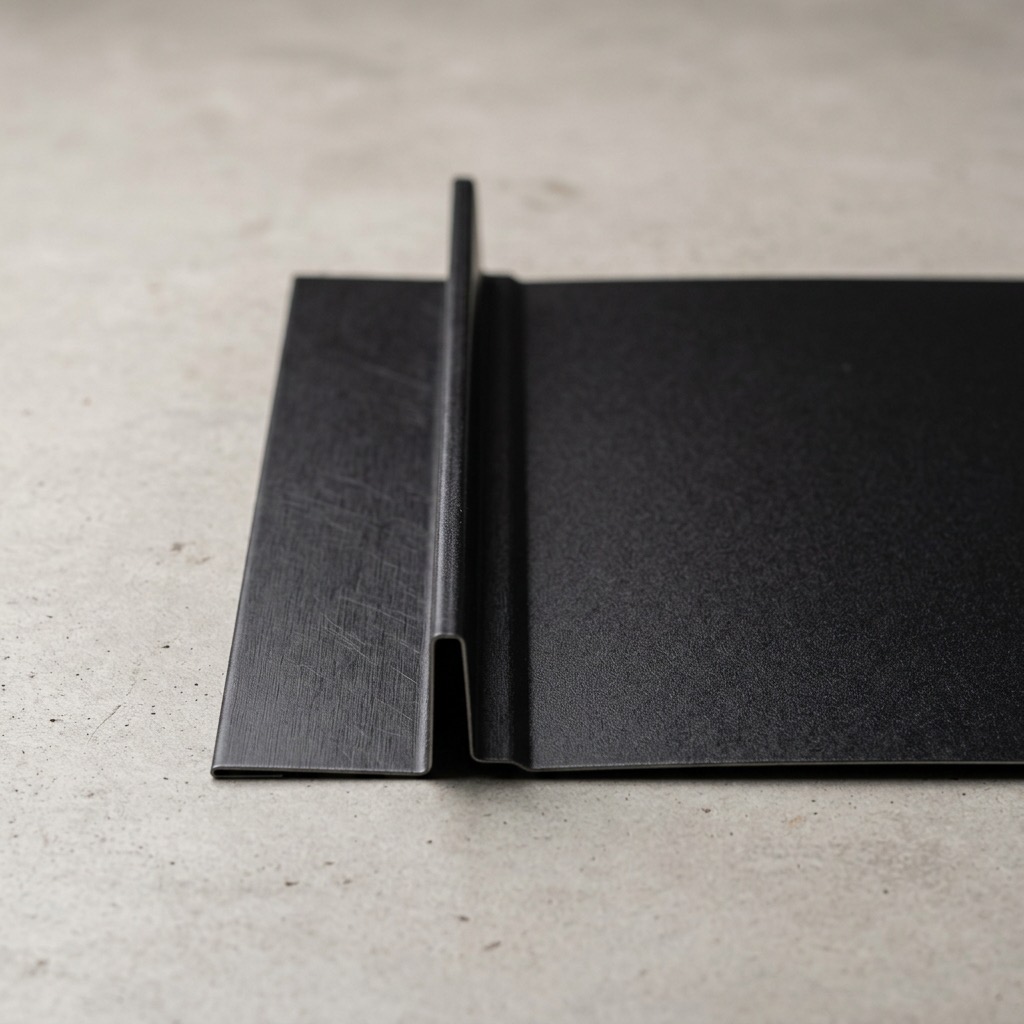
Matte Black Standing Seam Metal Roof

Standing Seam (Matte Dark)

Sleek, modern profile. Ideal for transitional home designs.

Metal Shingle Roof Mimicking Slate

Metal Shingle (Slate Profile)

Classic architectural look with long-term steel panel performance.

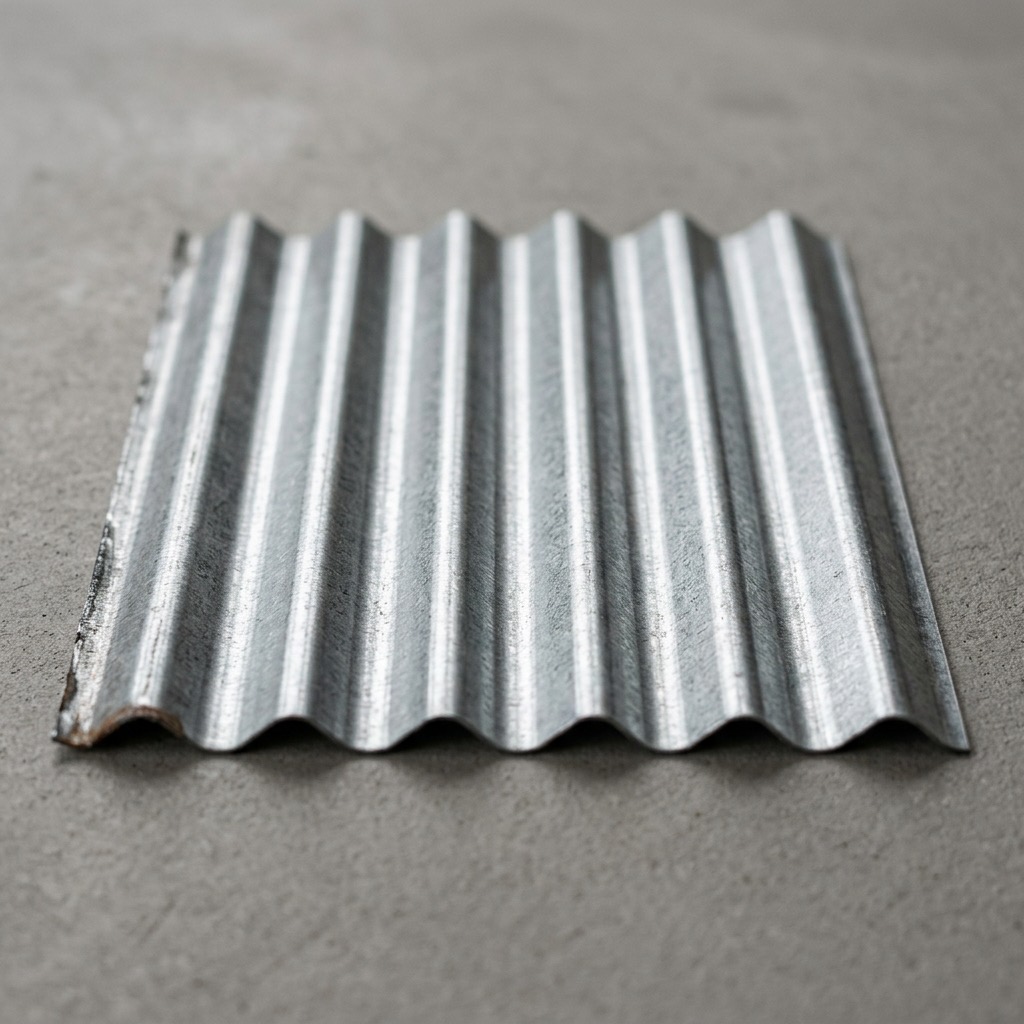
Corrugated Metal Roof

Corrugated / Exposed Fastener

Economical choice for garages, barns, and outbuildings.

What to Expect

How Naperville Metal Roof Coordination & Installation Works

Metal installation is more involved than asphalt — here's every phase, explained.

01

System Design & Quote

Our team member visits your home, takes precise measurements, assesses pitch and structural condition, and walks you through system options — profile, metal type, gauge, color, finish, and fastener system. You receive a fully itemized written quote covering all materials, installation labor, permit, and warranty terms.

On-Site Measurement Profile Selection Written Quote
02

HOA Approval & Permit

If your home is in an HOA community, our team prepares the specification and color documentation for your HOA submission — a step many contractors leave entirely to the homeowner. Building permit is pulled with your municipality (Naperville, Lisle, Downers Grove, etc.) once materials are confirmed.

HOA Docs Prepared Permit Filed for You
03

Tear-Off & Deck Preparation

Full removal of existing shingles, underlayment, and all flashing. Deck is inspected thoroughly — any damaged OSB or plywood is replaced before metal goes on. Metal roofing is unforgiving of deck irregularities; a flat, solid substrate is non-negotiable for a quality installation.

Full Tear-Off Deck Repair Flat Substrate
04

Underlayment & Flashing

High-temperature synthetic underlayment is installed — standard felt is not appropriate under metal due to thermal expansion and off-gassing concerns. All eave drip edge, valley flashing, step flashing, counter flashing, pipe boots, and ridge caps are installed to manufacturer spec before panels go on.

High-Temp Underlayment Custom Flashing
05

Panel Installation

Panels are installed from eave to ridge with proper thermal expansion allowances — a critical detail most DIY and inexperienced contractors miss. Standing seam clips are spaced to manufacturer specification. All cuts are clean and deburred to prevent rust initiation. Sealants are applied only where specified by the manufacturer.

Thermal Allowances Clean Cuts
06

Inspection, Cleanup & Warranty

Final inspection covers every seam, every penetration, and every flashing transition. Full cleanup including magnetic nail sweep. Warranty documentation — including the manufacturer's panel and paint warranty, and workmanship warranty — is delivered the prompt the project closes. Payment is collected after your final walkthrough sign-off.

Final Inspection Warranty Docs
Locally Owned & Operated

"We don't just work in Naperville. We live here."

"When you invest in a metal roof with Naperville Roofing Crew, you aren't dealing with a faceless national corporation. We're locally based, and we personally guarantee that our certified metal crews will treat your home with the exact same precision and respect we demand for our own."

Naperville Roofing Crew
BBB A+ Rating
Flexible Payment Options

A Premium Roof, Made Affordable

A standing seam or stone-coated metal roof is a multi-decade capital investment. We work with leading home improvement lenders to offer flexible financing options—including low-interest and zero-down plans—so you can protect your home today and pay over time.

Ask About Financing
Fast Approvals
Common Questions

Metal Roofing FAQ

Is metal roofing louder than asphalt during rain?

No — and this is one of the most persistent metal roofing myths. Residential metal roofing is installed over solid decking and high-density underlayment, which provides the same acoustic insulation as asphalt shingles. Homeowners consistently report no noticeable difference in rain noise after switching from asphalt to metal. The loud-in-rain perception applies to metal roofing installed over open framing (pole barns, agricultural buildings) — not to residential systems installed over plywood or OSB decking.

Will metal roofing attract lightning?

No. Lightning is attracted by height and the path of least resistance to ground — not by roofing material. Metal roofing does not make a building more likely to be struck than asphalt, wood, or tile. In fact, if struck, metal is non-combustible — unlike wood shake — which is why metal roofing is preferred in wildfire-risk zones. The American Metal Roofing Alliance, the Insurance Institute for Business and Home Safety, and most insurance carriers treat metal roofing as a lightning-neutral or positive factor.

Can metal roofing be installed over my existing asphalt shingles?

Technically possible in some situations, but we don't recommend it as a standard approach. Installing metal over an existing asphalt layer traps moisture, prevents deck inspection, voids most manufacturer warranties, and can create an uneven substrate that affects the finished appearance and panel performance. Our standard practice is full tear-off, deck inspection, and installation on a clean substrate — the only way to ensure the long-term performance that justifies the investment in a metal system.

Does my HOA need to approve a metal roof?

In most Naperville HOA communities, yes — any exterior roofing change requires architectural committee approval. Standing seam in particular may face resistance in traditional neighborhood HOAs, while metal shingle products that mimic asphalt or shake profiles are typically approved more readily. Our team has experience navigating DuPage County HOA processes and prepare the full specification packet — product data sheets, color samples, and project description — for your submission. We can also advise on the approval likelihood for specific systems in specific communities before you commit.

How does metal roofing handle snow and ice in Illinois winters?

Exceptionally well — this is metal roofing's single greatest advantage in the Naperville climate. The slick, hard surface of metal panels sheds snow naturally rather than holding it. This eliminates the conditions that allow ice dams to form — the backed-up water that forces its way under asphalt shingles and causes some of the most expensive interior water damage homeowners experience. One important note: snow guards (small devices that prevent large snow sheets from sliding off at once) are recommended on lower-pitch sections, entryways, and walkways. We include snow guard planning in every metal installation quote.

Is metal roofing worth the additional upfront cost?

For the right homeowner, yes — clearly. The honest answer depends on your time horizon and plans for the property. If you're planning to sell within 3–5 years, you're unlikely to recapture the premium in your sale price. If you plan to stay long-term, the math strongly favors metal: one installation vs. two or three asphalt replacements, plus insurance savings of $300–$600 per year accumulating over decades, plus zero maintenance costs. Over a 40-year period, the total cost of ownership of a metal roof is typically lower than repeated asphalt replacements — it's just weighted heavily toward the front. Our team will run the honest numbers for your specific situation before you decide.

Still weighing asphalt vs. metal?

Our team isn't commissioned on system type — they make the same regardless of whether you choose metal or asphalt. That means you get a genuinely neutral recommendation based on your home, your plans, and your budget. Schedule a free on-site consultation to get the honest answer for your specific situation.

Start Your Project

Get a Metal Roofing Quote — Free

A member of our team will visit your home, walk through every system option, and deliver a full written quote — materials, installation, permit, and warranty — at no charge and no obligation. Metal roofing is a significant investment; you deserve a thorough, unhurried consultation before you decide.

Factory-trained installation crews
Manufacturer finish & contractor workmanship warranties
HOA approval documentation prepared
Questions? (630) 763-1484

Request a Consultation

Our team responds within hours. Free. No obligation.