Roofing Across
DuPage, Will, Kane & Kendall Counties
What Chicago-Suburb Homeowners Need to Know About Their Roofs
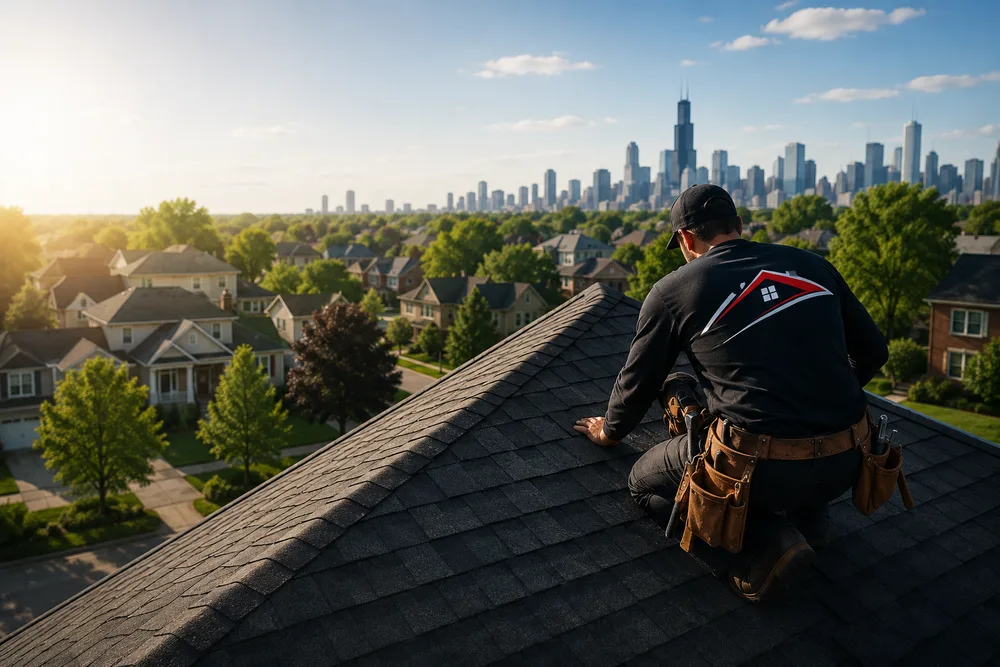
Naperville and its neighboring DuPage, Will,
and Kane County communities sit squarely in a challenging climate zone for roofing. Summers bring
heat and humidity that accelerate shingle oxidation and granule loss, while winters deliver freezing
temperatures, ice dams, and snow loads that stress roof structures and valleys. Perhaps most
significant: the Chicago suburbs lie in one of the most hail-active corridors in the United States,
with DuPage, Will, and Kane County all seeing multiple NOAA-documented significant hail events most
years.
How Long Does a Roof Last
in the Chicago Suburbs?
A standard 3-tab asphalt shingle roof in the
DuPage and Will County area typically lasts 15–20 years before it requires replacement — shorter
than the manufacturer's stated warranty, because Midwestern climate stressors are more severe than
many test conditions. Architectural (dimensional) shingles in good-quality products like GAF
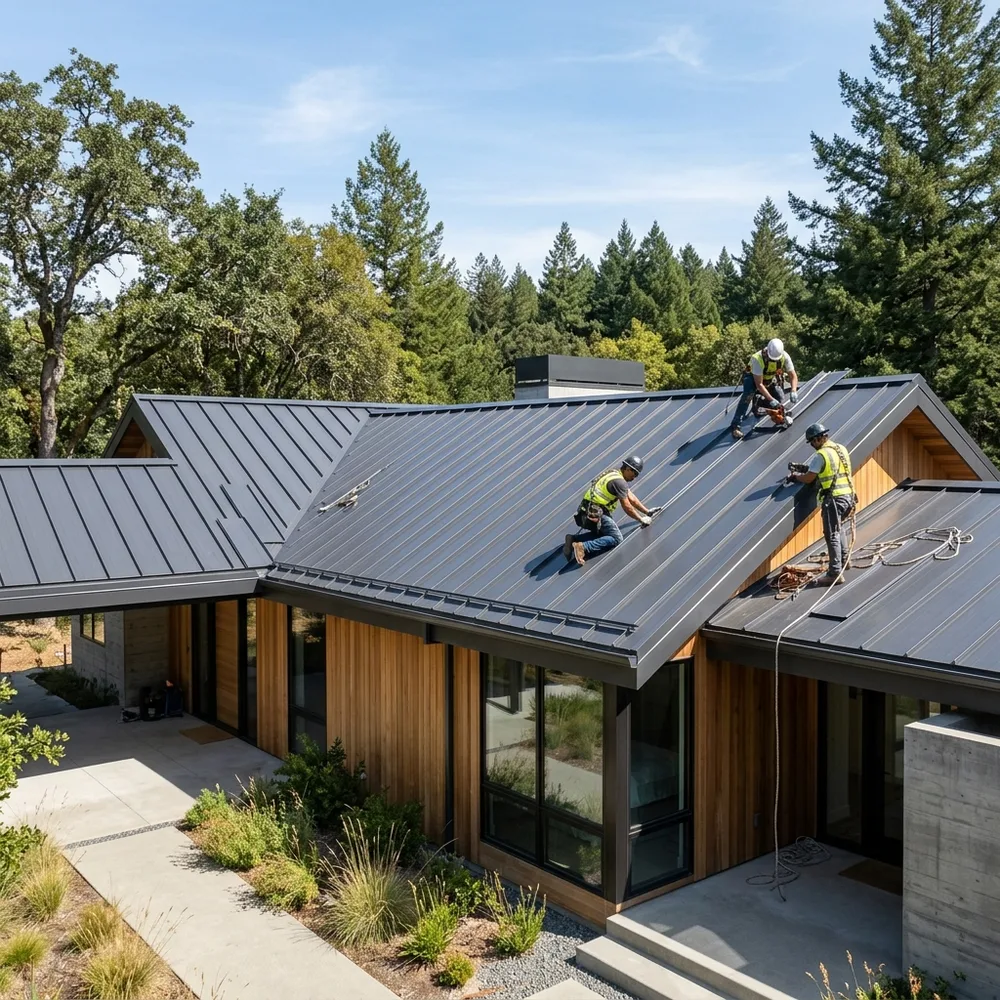
Timberline HDZ or Owens Corning Duration last 25–35 years in this climate. Metal roofing can exceed
50 years. Key shorteners: south-facing slopes (more UV exposure), poor attic ventilation, proximity
to mature trees, and previous hail events that bruised but did not immediately fail the shingle
surface.
Understanding Ice Dams on
Chicago-Area Homes
Ice dams form when heat escapes from the living
space into the attic, warms the roof deck, and melts snow that then refreezes at the cold eaves.
This pooling water backs up under shingles and into the home. Ice dams are a symptom of insufficient
attic insulation and ventilation — not a roofing defect per se. A proper ice dam solution involves
both repairing water intrusion damage and addressing the underlying ventilation issue. Installing
ice and water shield underlayment at eaves during a roof replacement helps prevent interior damage
when dams occur.
Roofing Permits & HOA
Considerations Across DuPage, Will, Kane & Kendall Counties
Most municipalities we serve — including
Naperville, Aurora, Wheaton, and Bolingbrook — require a building permit for roof replacement
projects, and each city's requirements differ slightly. Our team handles permit applications on
your behalf as part of every full replacement. If your home is governed by a homeowners
association — common in communities like Cress Creek, River Run, and Ashbury in Naperville, as well
as HOAs throughout Aurora and Bolingbrook — your HOA's CC&Rs may dictate acceptable shingle colors
and styles. Our team can help you select compliant materials before ordering, based on the CC&R
requirements common to DuPage and Will County HOAs.
Why Roofing Costs More
After a Major Storm Event
When a widespread hail event hits the Chicago
suburbs, demand for roofing contractors spikes sharply. Material lead times extend, labor premiums
increase, and out-of-area contractors flood the market — some with no Illinois license or local
accountability. After major storm events like those that impacted Naperville, Bolingbrook, and
Aurora in recent years, we prioritize existing customers and neighbors within our established
service area. Scheduling a free inspection immediately after a storm — even before you've filed a
claim — protects your claim timeline and ensures you work with a contractor you can hold
accountable.
Repair or Replace? A
Decision Guide for DuPage, Will, Kane & Kendall County Homeowners
The right answer depends on three factors: roof
age, extent of damage, and the cost differential. If your roof is under 10 years old and damage is
localized (a few missing shingles, one failed flashing), repair is almost always appropriate. If the
roof is 20+ years old, has multiple problem areas, or sustained widespread hail damage, replacement
typically offers better value — especially when insurance covers most of the cost. The worst outcome
is repairing a 22-year-old roof for $1,800 and replacing it a year later anyway. We always present
both options with honest guidance on which makes more financial sense for your specific situation.
Beyond the Roof: Complete
Exterior Protection
A roof replacement is also the right time to
address the systems that protect it. Damaged or undersized gutters send water straight back into your fascia and
foundation instead of away from the house — we often replace them in the same visit as a
re-roof. Leaking skylights
are almost always a flashing failure, not a glass problem, and get resolved as part of the same
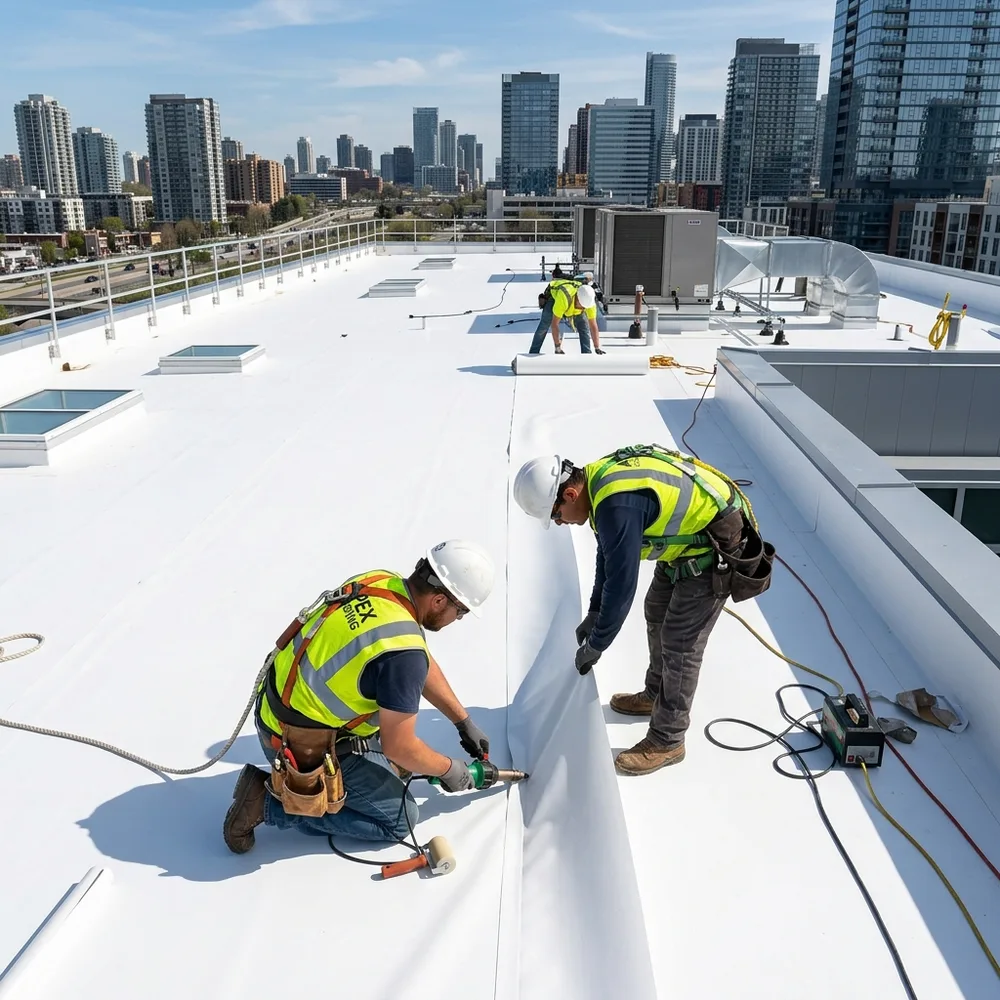
inspection. For steel-frame commercial buildings and low-slope additions, our commercial and flat & low-slope roofing teams
handle TPO, EPDM, and metal systems with the same inspection-first approach. And if a hail or wind
event is what brought you here, our insurance claim assistance covers documentation and
adjuster meetings at no extra charge, regardless of which service you need.