Roofing Contractor
Naperville, IL
- Illinois Matching Law: 60540 & 60565 homes with discontinued designer shingles often qualify for full insurance-funded replacements.
- Code Compliance: Strict adherence to City of Naperville 2021 IRC locally amended building codes.
- HOA Approvals: Records of approved palettes for White Eagle, Ashbury, and River Run already on file.
Naperville is our home base — we've operated here since 2005 and have completed more roofing projects in this city than anywhere else in our service area. Naperville's housing stock spans six decades of construction across four zip codes, each with distinct roofing vulnerabilities, HOA requirements, and permit processes. We know DuPage County building code, the City of Naperville permit office, and the specific failure patterns in Naperville's neighborhoods as well as anyone working in the local market.
DuPage County Averages Four to Six Damaging Hail Events Per Year — and Naperville Is in the Middle of Every Track
Naperville's geography puts it directly in the primary storm track that moves northeast off the Fox River Valley corridor. Unlike communities further north and east that benefit from some urban heat island buffering, Naperville sits at the edge of the suburban fringe where storm systems are still at or near peak intensity. NOAA storm event data for DuPage County documents recurring hail events — the June 2020 outbreak dropped 2.00" hail across north Naperville, the June 2017 severe outbreak hit the entire Route 59 corridor, and the August 2020 Derecho produced straight-line wind damage county-wide that collapsed the claims capacity of every major Illinois carrier simultaneously.
The cumulative impact across Naperville's housing stock is significant — and the documentation problem is compounding. Homeowners who didn't file claims in 2017 may now have roofs with pre-existing uncompensated storm damage layered under 2020 and 2022 impacts. Correctly separating storm-caused functional damage from normal weathering wear under the Illinois Insurance Matching Law requires both technical knowledge and NOAA record cross-referencing. We do this on every inspection as a standard step, and we attend every adjuster visit to present the case in person.
How we manage DuPage hail & wind claimsNaperville homeowners affected by the 2022 or 2020 events may still have actionable insurance claims depending on carrier and policy type. RCV policies that issued depreciation holdbacks at original claim settlement may have open recoverable depreciation that can still be collected after a completed replacement. Request a free post-storm inspection and policy review.
Ice Dams and Freeze-Thaw Damage Are a Recurring Problem in Naperville's Older Neighborhoods
Ice dams form when attic heat loss melts snow on the upper roof plane. Meltwater runs to the cold eave overhang, refreezes, and builds a ridge that blocks subsequent drainage. Water trapped behind the dam backs up under the shingles — and because Illinois code only requires ice-and-water shield 24" past the interior warm wall, water traveling further up the eave encounters unprotected decking. The results are ceiling stains, saturated batt insulation, and — in Naperville's pre-1985 construction — structural sheathing rot that often doesn't become visible until a major re-roofing teardown reveals extensive black staining and soft spots in the deck.
Naperville's older west-side neighborhoods — the areas developed along the DuPage River between Ogden Avenue and the train station — are particularly susceptible. Many of these homes have original attic insulation and ventilation systems from the 1960s and 1970s that are substantially below current code ratios. Cathedral ceilings in Naperville's custom home corridor north of Ogden create cold spots that initiate ice dam formation even on otherwise well-ventilated roofs. Every re-roofing estimate we provide in Naperville's older zip codes includes a formal attic ventilation and insulation assessment at no additional charge.
Schedule a winter damage assessmentOriginal construction along Washington, Eagle, and Jefferson Streets. Shallow 4:12 rooflines, original blown cellulose or batt insulation, and minimal ridge ventilation. Ice dam events are nearly annual in cold winters. Many of these homes have never had ventilation corrected to current 1:150 net-free-area ratios.
Large custom homes in the Hobson Road and 75th Street corridor frequently have complex rooflines with cathedral sections, dormers, and valleys that create thermal bridging. Valleys and dormer cheeks are the primary ice dam initiation zones regardless of overall ventilation quality.
Generally better-ventilated due to post-1993 Illinois code requirements, but additions and three-season rooms frequently break insulation continuity at the eave. Garage-to-living-space conversions are a recurring problem zone in this era's housing stock.
Insurance note: Ice dam damage is covered under most Illinois HO-3 policies as a sudden water damage peril. However, a carrier can deny a repeat ice dam claim if the underlying ventilation deficiency was identified in a prior claim and not remediated. We document both the damage and the ventilation condition in every assessment to protect your future claim eligibility.
Naperville Has Four Distinct Zip Codes — Each With Different Roofing Profiles, HOA Requirements, and Construction Eras
No other city in our service area has this level of internal variation. A 60540 home near downtown and a 60564 home in south Naperville are separated by thirty years of construction standards, entirely different permit processes, and often radically different HOA requirements. We know all four zones and price accordingly.
Naperville's original zip code covers the oldest and most architecturally varied housing stock in the city — Tudor revivals, cape cods, and post-war ranches from the 1940s through the 1970s, alongside larger custom homes along the DuPage River from the 1980s. These homes are on their second or third roofing system. Chimney flashing failures are the most common active leak source; pipe boot deterioration and valley metal fatigue are close behind. Attic ventilation in this era is almost always inadequate by current standards — we assess and correct it on every project. Many 60540 properties also fall within Naperville's Historic District or within HOA overlay zones that require specific shingle profiles and colors; we carry shingle samples for all approved products to every estimate in this area.
North and northeast Naperville along the Route 59 corridor developed rapidly in the late 1980s and 1990s. This zip code contains Naperville's highest concentration of active HOAs with formal architectural review committees — communities like White Eagle, River Run, and Ashbury typically restrict shingle color and profile, with some requiring manufacturer-specific approval. We have established relationships with the architectural review coordinators for the major 60563 HOAs and know their approval timelines so we can include them in project scheduling without delay. The housing stock is now entering its first major replacement cycle; two-story colonials and four-squares with original builder-grade shingles are the dominant profile.
The 60565 zip code covers Naperville's custom home belt — larger lots, more complex rooflines, higher-value properties. Roof replacements here typically run $20,000–$40,000 due to roof complexity, premium material specifications, and the higher proportion of slate, tile, or designer shingle products on existing homes. We scope these carefully: accurate measurement of a 10-hip, 14-valley custom home requires on-roof measurement, not satellite estimation. Insurance claim work in 60565 requires particular precision in scope documentation — underpayment risk is proportionally higher on large complex roofs where a missed valley or dormer in the adjuster's scope represents $3,000–$6,000 in uncaptured damage.
South Naperville (60564) is the city's newest residential development zone, with the majority of homes built between 1998 and 2012. Most of this housing stock is approaching the 20–25 year first-replacement window for original builder-grade shingles, and the 2017 and 2020 storm events have accelerated the timeline. Class 4 impact-resistant shingle upgrades are particularly economical for 60564 homeowners — newer homes in this area typically have straightforward rooflines that keep installation costs lower, making the payback period on the premium upgrade as short as three years with State Farm and Allstate discounts. We discuss Class 4 economics at every 60564 replacement estimate.
One Call Gets a Naperville Crew On Your Roof
Written estimates within 48 hours, GAF Master Elite® certified installation, and a crew that knows Naperville's permit process cold.
City of Naperville Roofing Permit Requirements
The City of Naperville requires a building permit for all roof replacements through the Development Services Department, located at 400 S. Eagle Street. Naperville processes permits online through their ePermit portal — a system we use daily. Standard roofing permit applications are typically approved in 3–5 business days, faster than most surrounding DuPage County municipalities. Contractor licensing with the City is required before permit issuance; we maintain active Naperville contractor registration and carry all required certificates of insurance on file for same-day permit submission.
Naperville operates under the Illinois Residential Code as locally amended. The City requires a final inspection after project completion — we schedule and manage this directly. Certificate of Occupancy documentation is important for homeowners in Naperville's resale market, where buyer's attorneys routinely check permit records as part of due diligence. Unpermitted roofing work in Naperville is a common transaction complication we see when homeowners used unlicensed contractors. We provide all Naperville homeowners with the required "Home Repair: Know Your Rights" pamphlet as mandated by the Illinois Home Repair and Remodeling Act, and include full permit and inspection management at no additional charge on every project.
| Requirement | Naperville Standard | Our Performance | Why This Matters |
|---|---|---|---|
| Ice & Water Shield | 24" past interior warm wall | Exceeds — full eave coverage standard | Prevents ice dams and winter leaks. |
| Drip Edge | Mandatory — eaves & rakes | Included standard (heavy gauge) | Keeps wind-driven rain off the fascia. |
| Final Inspection | Required — City of Naperville | 100% pass rate · Managed directly | Clear permit record avoids resale delays. |
| Contractor License | City of Naperville registration | Current — ePermit ready | Ensures liability coverage is verified. |
| Attic Ventilation | IL code ratio at time of replacement | Assessed + corrected every project | Protects the 50-year manufacturer warranty. |
| HOA Pre-Approval | Required where applicable | Handled · known committees on file | Prevents costly forced tear-offs by HOA. |
Properties within the Naperville Historic District (generally the area bounded by Chicago Avenue, River Road, and Benton Avenue) may require additional review by the Heritage Advisory Commission before a roofing permit is approved. Material changes — such as switching from wood shake to asphalt — may require a Certificate of Appropriateness. We identify Historic District status at the estimate visit and navigate the additional documentation if required, with no added fee.
The Most Common Leak Sources in Naperville Homes — by Construction Era and ZIP Code
Twenty years of repair calls across Naperville's four zip codes produces patterns. We know which failure modes are endemic in which neighborhoods and we investigate accordingly — which means faster diagnoses, more accurate repair scopes, and less unnecessary work.
60540 Pre-1980 Construction
Brick chimney step-flashing failures are the leading active leak source — mortar joints in older step and counter flashing have completed 40+ freeze-thaw cycles and commonly fail at the reglet. Original galvanized valley metal has also oxidized through in many of these homes, producing center-valley ceiling stains. Pipe boots hardened and cracked years ago. A second leak source in this era is the original lead-coated copper flashing at skylight curbs — still functional but often incorrectly re-sealed rather than replaced by previous contractors, which creates a recurring maintenance cycle we break by replacing to current spec.
Roof repair services60563 & 60565 — 1988–2002 Builder-Grade
Pipe boot collar failures (neoprene cracking at the stack after 20 years) are the single most frequent repair call across north and west Naperville's 1990s stock. Complex rooflines in the 60565 custom home belt create valley and hip geometry errors that were installed incorrectly during original construction and continue to generate callbacks for previous contractors; we assess and correct these geometry issues rather than patching over them. Dormer cheek flashings — particularly on the 1995–2005 era additions common in this zip — are a reliable source of interior wall staining when sealant fails.
Roof repair servicesNaperville Repair vs. Replace Decision
For Naperville homes past 18 years, the repair question almost always deserves a full assessment before commitment. In Naperville's competitive resale market, a documented condition report with remaining useful life estimate adds tangible value at listing time and prevents the scenario where a buyer's inspector flags the roof as a deferred maintenance item and extracts a price concession. We give an honest repair-vs-replace assessment at every service call — including when repair is the right answer. We will not upsell a replacement on a roof with 6–8 years of life remaining.
Repair vs. replace guideRoofing Services We Provide in Naperville
Roof Replacement
Full tear-off and replacement across all four Naperville zip codes. GAF Master Elite® certified crew with Golden Pledge® 50-year warranty available — the only warranty in the roofing industry that covers both labor and materials for the life of the roof.
Roof Repair
Leak investigation and repair across all Naperville construction eras — chimney flashing, pipe boots, valley metal, dormer cheeks, skylight curbs, and low-slope addition transitions. Written repair scope and honest remaining-life assessment included.
Storm Damage & Claims
Hail and wind damage documentation for DuPage County properties. We attend your adjuster inspection, submit supplements when the initial scope is low, and have experience with every major carrier operating in the Naperville market — State Farm, Allstate, Farmers, Country Financial, Erie.
Asphalt Shingles
Full GAF product line including Timberline HDZ®, Timberline ArmorShield II® Class 4, and designer series products for 60565 custom homes and 60540 Historic District-approved profiles. We carry samples of HOA-approved products for every major Naperville HOA.
Gutters & Downspouts
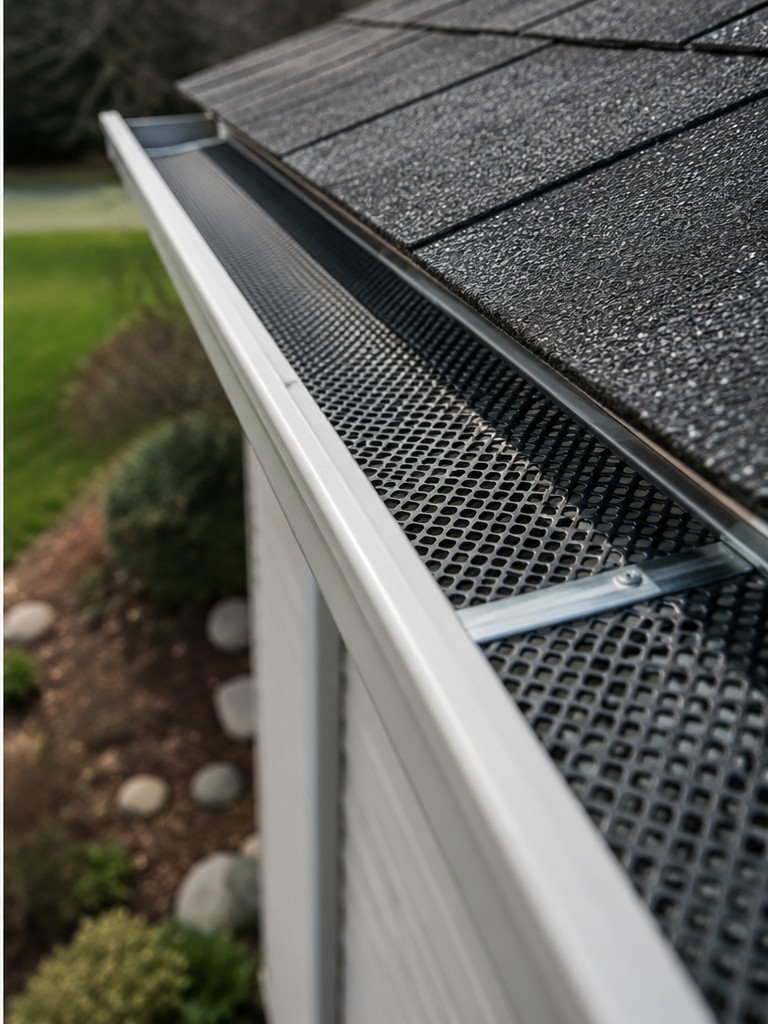
Seamless aluminum gutter installation and storm damage replacement. Hail-dented gutters are one of the most consistently underpaid line items in DuPage County insurance claims — we document and include them in every claim scope. Custom colors available for 60565 and HOA-governed properties.
Roof Inspections
Free 30-point inspections for Naperville homeowners — post-storm, pre-listing, pre-purchase, and annual maintenance. Written condition report with photos, A–F condition grade, and remaining useful life estimate. DuPage County insurer-accepted documentation format.
What Our Work in Naperville Actually Looks Like
We've completed over 800 roofing projects in Naperville since 2005 — across all four zip codes and every project type. These representative examples reflect the three most common scenarios we manage in the Naperville market.

Homeowner had received a replacement proposal from a competitor that didn't account for White Eagle's HOA color restriction — the proposed shingle was not on the approved palette. We identified the issue before signing, cross-referenced the HOA's current approved product list, submitted the pre-approval documentation to the architectural review coordinator, and received written approval before the permit was filed. Project completed with GAF Timberline HDZ® in Charcoal — the approved profile — with Golden Pledge® warranty. HOA approval to installation in under three weeks total.
Original Allstate scope had missed two dormers, used incorrect satellite square footage (off by 340 sq ft on a complex multi-hip layout), and excluded the gutters, skylights, and fascia despite visible hail impact. We performed on-roof measurement, documented 60+ hail strikes across four roof planes, photographed all secondary damage, and submitted a supplement using Xactimate line items in Allstate's preferred format. Final approved scope came in $11,200 above the original estimate — covering the full replacement including Class 4 shingle upgrade and all secondary items. $0 out-of-pocket beyond the deductible.
Homeowner's real estate attorney recommended a pre-listing roof assessment after Naperville's competitive market began seeing buyer attorneys flag roof age during due diligence. Inspection revealed two active chimney flashing failures and one failed pipe boot — all repairable. We completed targeted repairs, replaced the pipe boot, and provided a written condition report with photos and a 6–8 year remaining useful life estimate in a format the listing agent could include in the seller's disclosure package. Buyer's inspector noted the repairs and condition report at closing — no roof-related price negotiation. Total repair cost: $1,100.
What Naperville Homeowners Say
Verified Google reviews from Naperville, IL homeowners. See all 312+ reviews →
"We live in White Eagle and had already signed a contract with another roofer when they told us the shingle color wasn't HOA-approved and we'd have to start over. Naperville Roofing Crew handled the HOA approval before we even signed their contract. The whole process was transparent and the crew was excellent. Would not use anyone else in this subdivision."
"Our Allstate adjuster came out and quoted us $14,000 for a roof we knew needed at least $22,000 of work. The team came back with us for a second inspection, documented everything the adjuster had missed including two dormers and all the gutters, and submitted a supplement. Final approved amount was $24,800. We upgraded to Class 4 shingles and our premium dropped $340 per year."
"We had an ice dam that caused a ceiling stain in our 1972 home near downtown. Everyone else just wanted to replace the whole roof. They came out, identified the ventilation problem — a blocked ridge vent from a previous insulation contractor — fixed it, repaired the two damaged shingles, replaced the pipe boot, and gave us a full written report. We spent $1,400 and have not had an ice dam since."
Roofing FAQ for Naperville Homeowners
Do I need a permit to replace my roof in Naperville?
Yes. The City of Naperville requires a building permit for all roof replacements, processed through the Development Services Department via the online ePermit portal. Permits are typically approved within 3–5 business days — faster than most surrounding municipalities. Contractor registration with the City is required before permit issuance; we maintain active registration and carry all required insurance documentation for same-day permit submission. Projects completed without a permit create disclosure complications in Naperville's active resale market, where buyer's attorneys routinely check permit records during due diligence. We include permit and final inspection management at no additional charge on every project.
My Naperville subdivision has an HOA. How does that affect getting a new roof?
HOA requirements in Naperville vary significantly by community. White Eagle, River Run, and Ashbury have formal architectural review committees with written approved product lists — typically specifying shingle color palette, profile (laminate/architectural only), and in some cases requiring specific manufacturer lines. The review and approval process typically takes 7–14 days and must be completed before a permit is filed. Communities like Springbrook Prairie have less restrictive guidelines that only require notification rather than pre-approval. We verify your specific HOA requirements at the estimate visit using our on-file documentation for the major Naperville communities, and we manage the submission and approval process at no added charge. The single most common HOA-related problem we see is contractors who skip the approval step and create a post-installation compliance issue for the homeowner.
How much does roof replacement cost in Naperville?
Naperville replacement costs vary more than any other city in our service area because of the diversity of housing stock. A straightforward 60564 two-story colonial (2,200–2,600 sq ft, 6:12 pitch, four-plane roof) typically runs $12,500–$18,000 with GAF Timberline HDZ® architectural shingles, including permit, tear-off, ice-and-water shield, and all flashings. A 60565 custom home with a 10-hip roofline, dormers, and skylights can run $28,000–$45,000 or more depending on complexity and material selection. Storm-damage replacements are typically covered to replacement cost value (RCV) less your deductible if you have an RCV policy. For a line-item breakdown of Xactimate labor rates for the 60540 area, read our 2026 Naperville Roof Replacement Cost Guide.
Is it worth upgrading to Class 4 impact-resistant shingles in Naperville?
For most Naperville homeowners, yes — the economics are generally favorable. Class 4 impact-resistant shingles (GAF Timberline ArmorShield II® is the most common) typically add $1,500–$3,500 to a standard Naperville replacement depending on roof size. State Farm, Allstate, and Farmers offer premium discounts of 20–30% on the wind/hail portion of the policy for certified Class 4 roofs — for a Naperville homeowner paying $2,400/year in homeowners insurance, that can represent $400–$600 in annual savings. Payback on the upgrade cost is commonly 4–6 years, after which the savings continue for the life of the roof. Class 4 shingles also reduce your probability of a future storm claim, protecting your claims history. We run the specific numbers for your policy at every estimate. Read our Illinois insurance guide for carrier-specific discount details.
How do I know if my Naperville roof has hail damage?
Functional hail damage — the kind that qualifies for an insurance claim — is typically not visible from the ground. It manifests as granule displacement and fiberglass mat fracture at the impact point, which looks like a normal shingle from below but shows as a dark bruise with displaced granules when touched on the roof surface. The most reliable ground-level indicator is impact dents on aluminum gutters and fascia — if your gutters show denting after a hail event, there is a high probability your shingles sustained functional damage as well. Soft metals (gutters, fascia, AC fins, window screens) dent at approximately the same hail size threshold as functional shingle damage. A free post-storm inspection is the only way to generate documentation sufficient for a DuPage County insurance claim.
Does Naperville require a roof inspection when selling a home?
The City of Naperville does not mandate a specific pre-sale roof inspection, but buyer's attorneys in Naperville's competitive market routinely pull permit records as part of due diligence — and a roof replacement without a permit on record creates a required disclosure item that frequently triggers price negotiation or a demand for a new roof prior to closing. Additionally, lenders for FHA and VA transactions may require a roof certification if the appraiser notes visible deficiencies. A pre-listing inspection and any needed repairs, documented in writing, protects your disclosure position and typically eliminates roof-related negotiation at closing. Our pre-listing inspection and condition report package is included at no charge with any repair or replacement work.
My Naperville home gets ice dams every winter. Is that a roofing problem or an insulation problem?
Both — but the root cause is almost always inadequate attic ventilation or insulation, not a roofing defect. Ice dams form when heat escaping through the attic floor melts snow on the upper roof; the meltwater refreezes at the cold eave and backs up under the shingles. Replacing the roof without correcting the underlying ventilation deficiency simply recreates the same problem on new shingles and, critically, voids the shingle manufacturer's warranty — every major manufacturer including GAF explicitly excludes ice dam damage caused by inadequate attic ventilation. The correct fix is to correct the ventilation first, then replace or repair the roof. We assess ventilation at every estimate and provide a written ventilation correction plan as part of any re-roofing proposal for Naperville's older homes. In most cases, the ventilation correction can be completed as part of the roofing project with minimal added cost.
Which insurance companies handle most roof claims in DuPage County?
In our experience managing over 1,200 DuPage and Will County claims, the most prevalent carriers in the Naperville market are State Farm, Allstate, Farmers, Country Financial, and Erie Insurance. Each has distinct claim handling tendencies: State Farm and Allstate use Xactimate pricing and respond well to HAAG Engineering functional damage language in inspection documentation. Farmers typically issues faster initial offers but with more conservative line items on secondary damage like gutters and fascia. Country Financial's regional adjusters are generally more receptive to accompaniment and supplement negotiation than carriers using third-party inspection services. We've managed claims with all of these carriers extensively and know what documentation format each one requires. If your initial claim offer seems low, request a supplemental inspection before accepting — underpayment on the first pass is common in DuPage County's active hail market.
How do I find a reputable roofing contractor in Naperville?
Four verifiable steps before signing anything: (1) Confirm the contractor holds current registration with the City of Naperville — the Development Services Department can verify this by phone or online; (2) verify their certificate of insurance names your property address specifically, not just a blanket policy number; (3) confirm they pull permits themselves — any contractor who suggests skipping the permit is transferring legal and financial liability to you; (4) for HOA-governed properties, confirm they've completed the HOA pre-approval process before, not after, signing your contract. Beyond those basics, look for contractors who have local Google reviews from Naperville homeowners by name and neighborhood — not generic 5-star reviews without location detail — and who provide written proposals itemizing every line of work rather than a single lump-sum number.
Request a Free Estimate in Naperville
Naperville is our home — we've been operating here since 2005 with 800+ completed projects across all four zip codes. On-site assessment, written itemized proposal within 48 hours, City of Naperville permit and HOA documentation handled by our team.